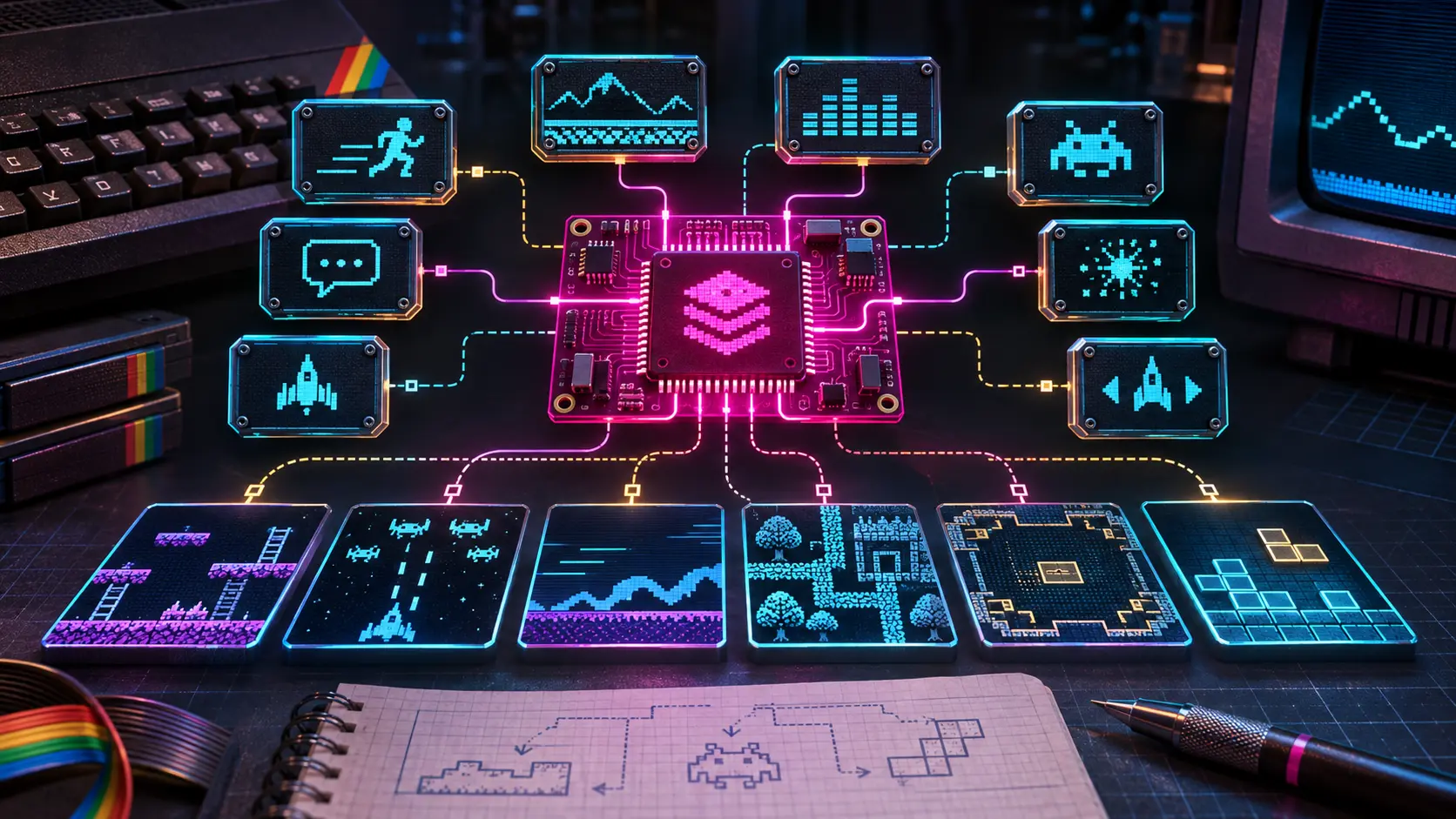
From platformers to shoot-em-ups: combining the Spectrum Next drivers
Proposed driver combinations for platformers, shoot-em-ups, runners, adventures, arena games and puzzles, with clear ownership and honest evidence boundaries.
Read article DYSTOPIANPIXEL
Writing about retro development: the decisions behind the projects, what I am learning and the possibilities I want to explore.
Proposed driver combinations for platformers, shoot-em-ups, runners, adventures, arena games and puzzles, with clear ownership and honest evidence boundaries.
Read article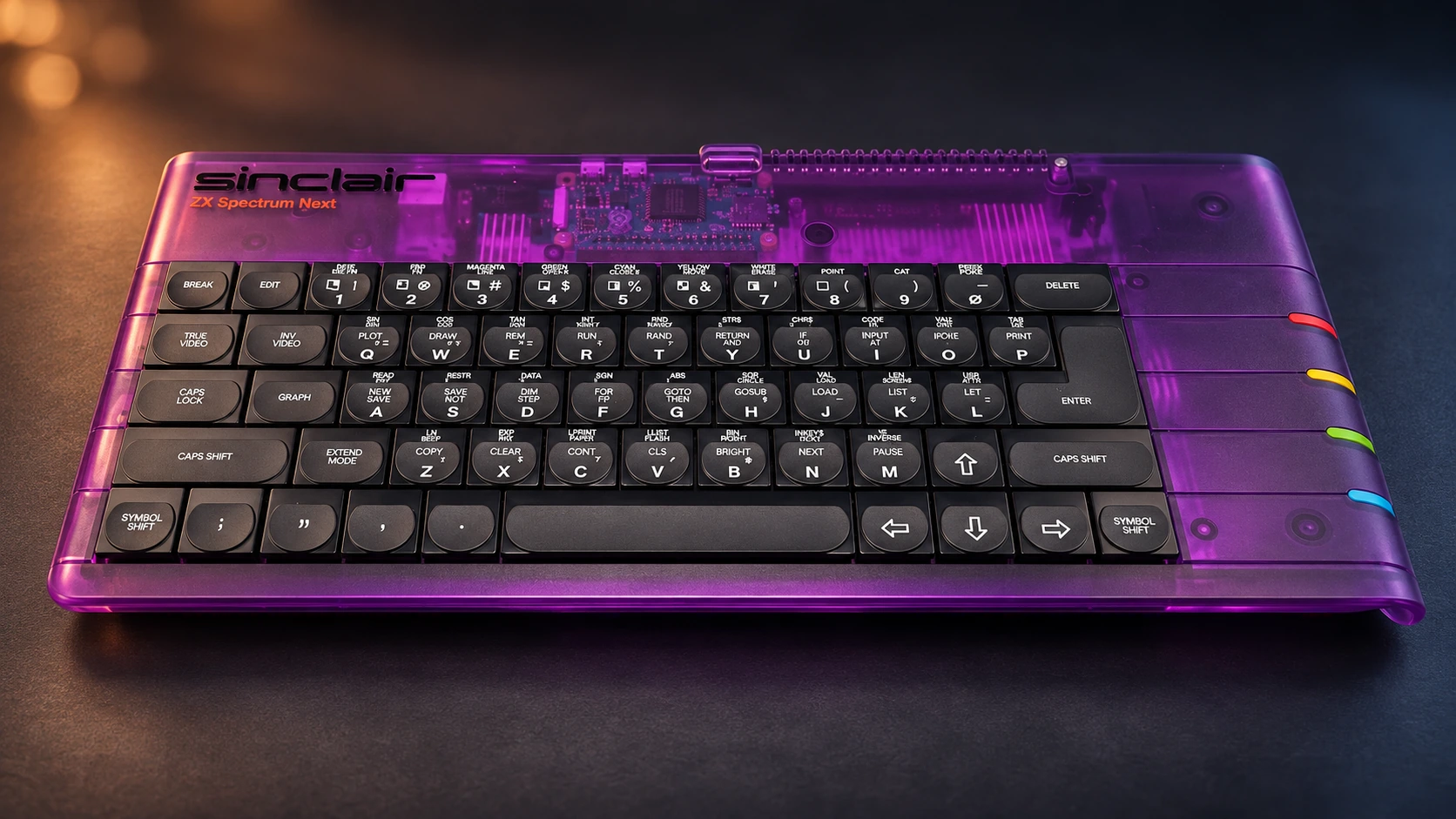
A magenta Spectrum Next, a quietly amused wife, and the unmistakable buzz of unboxing something worth waiting for. My KS3 has arrived—and its first day in the workshop is already under way.
Read article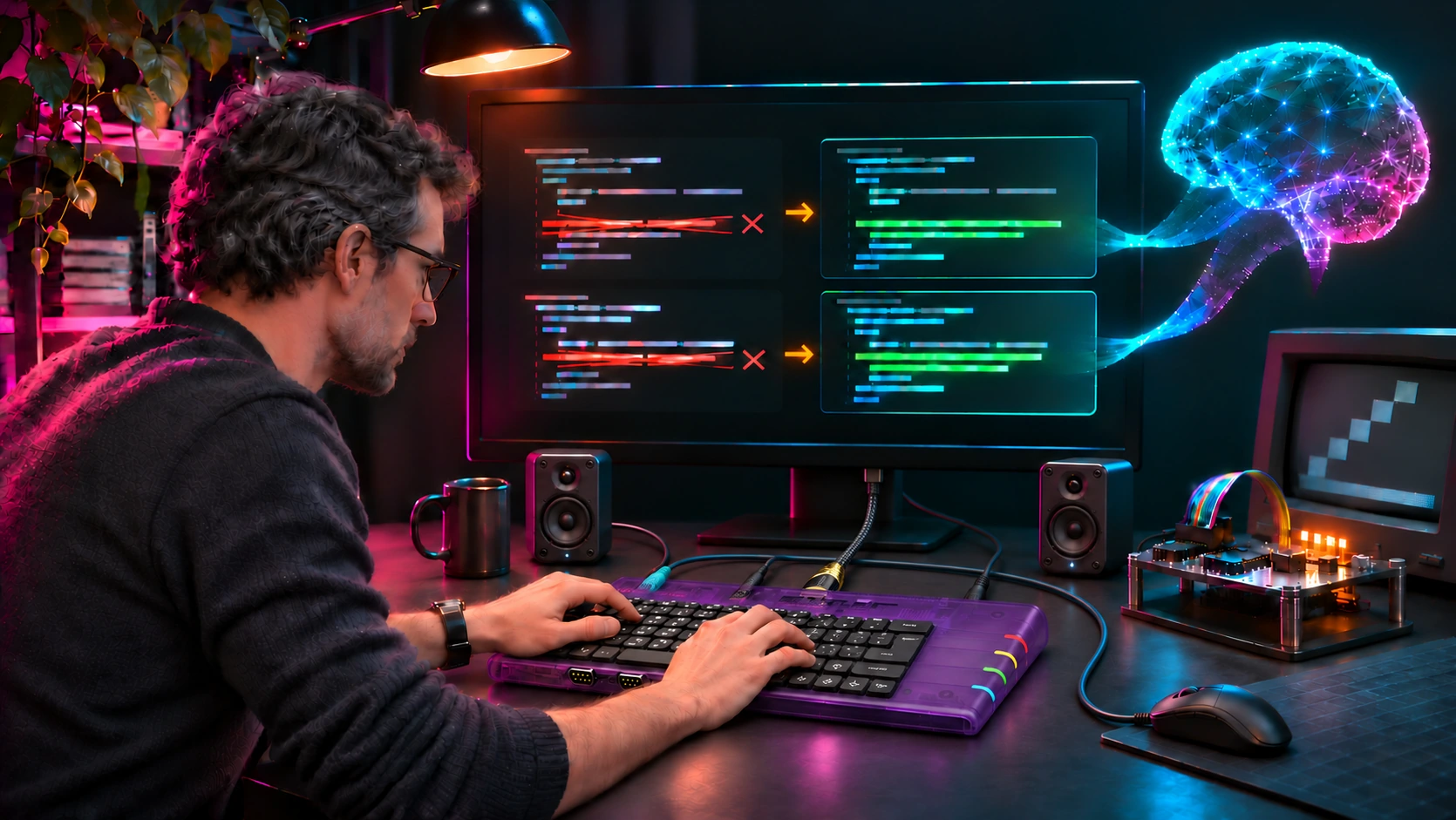
How AI can help Spectrum Next development, where it invents or assumes too much, and why testing, attribution and responsibility remain with the developer.
Read article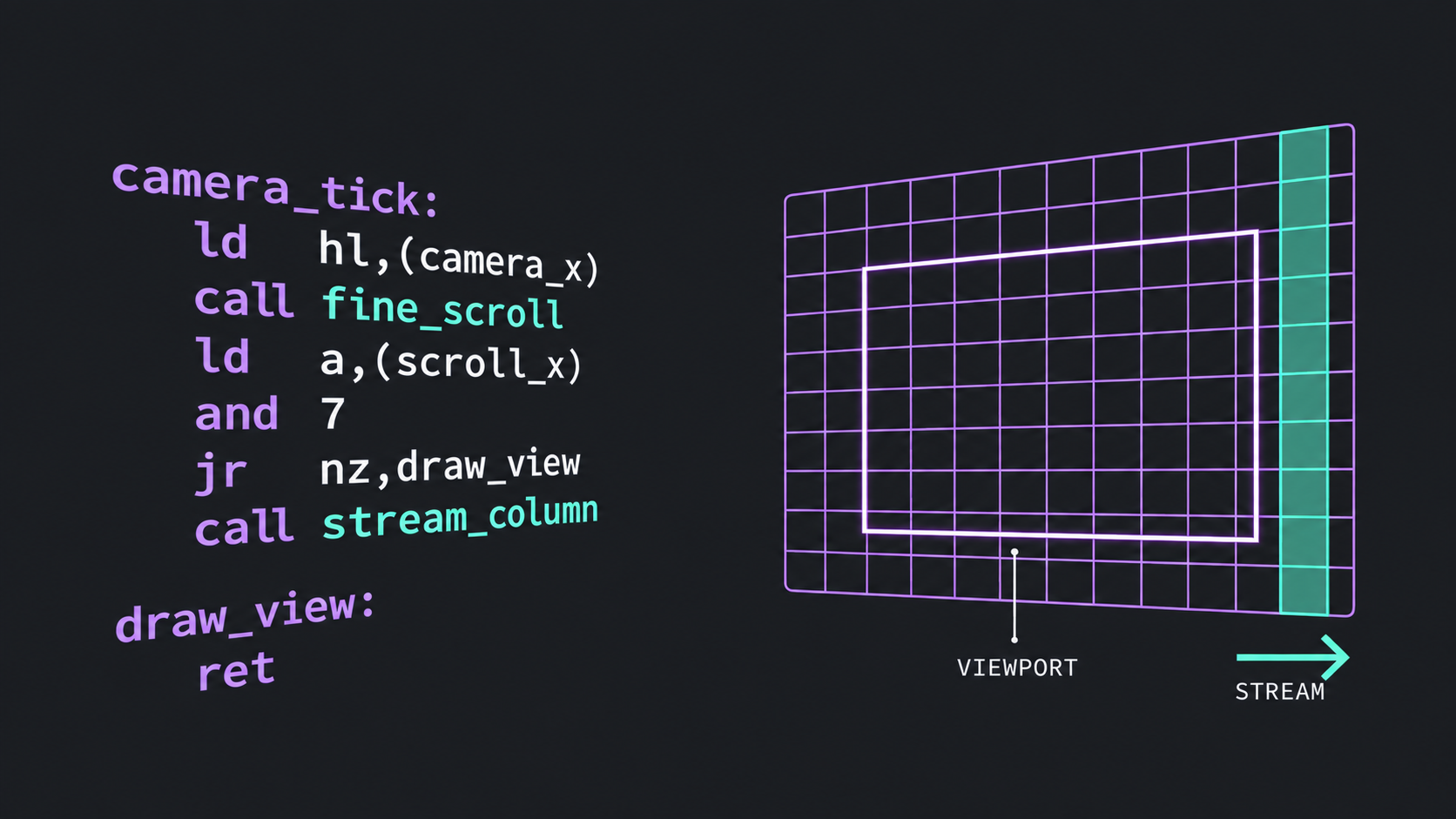
Why processing headroom, predictable game time and clear ownership need a common standard across the Dystopian Pixel drivers.
Read article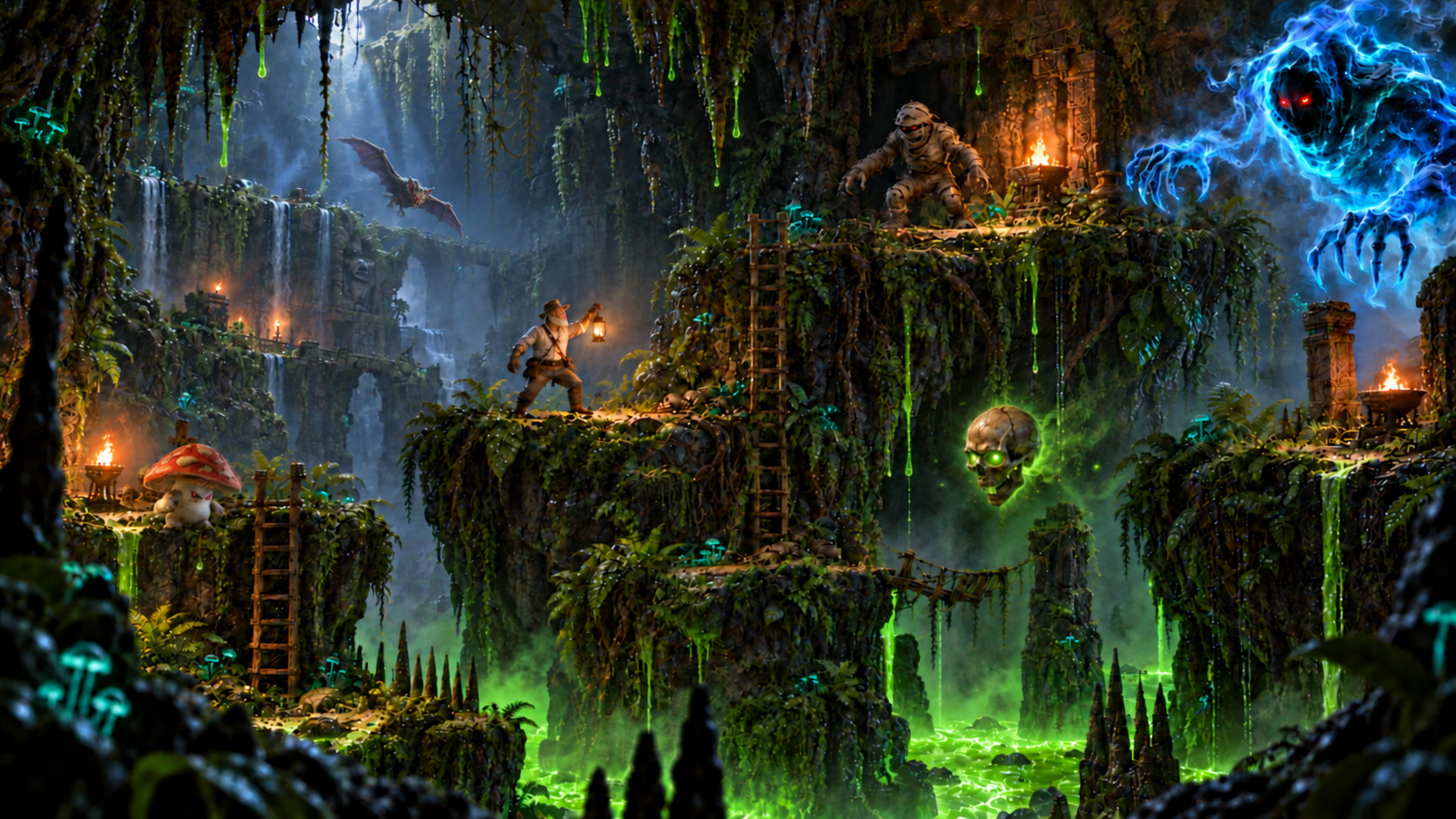
How The Lost Caverns gives reusable tools a practical purpose, and how to keep those tools helping the game progress.
Read article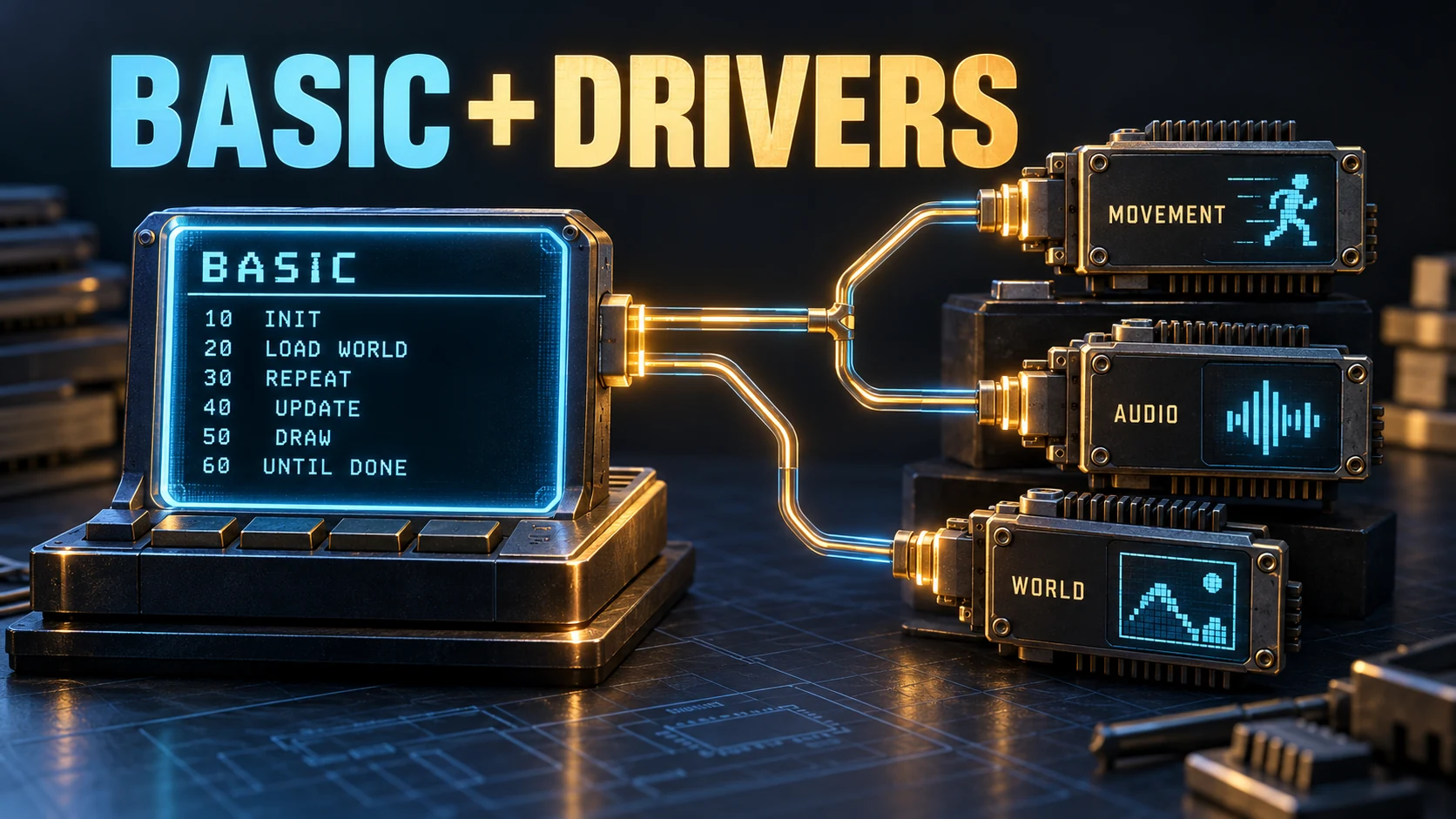
A practical guide to dividing movement, world information, game rules and presentation between BASIC and focused drivers.
Read article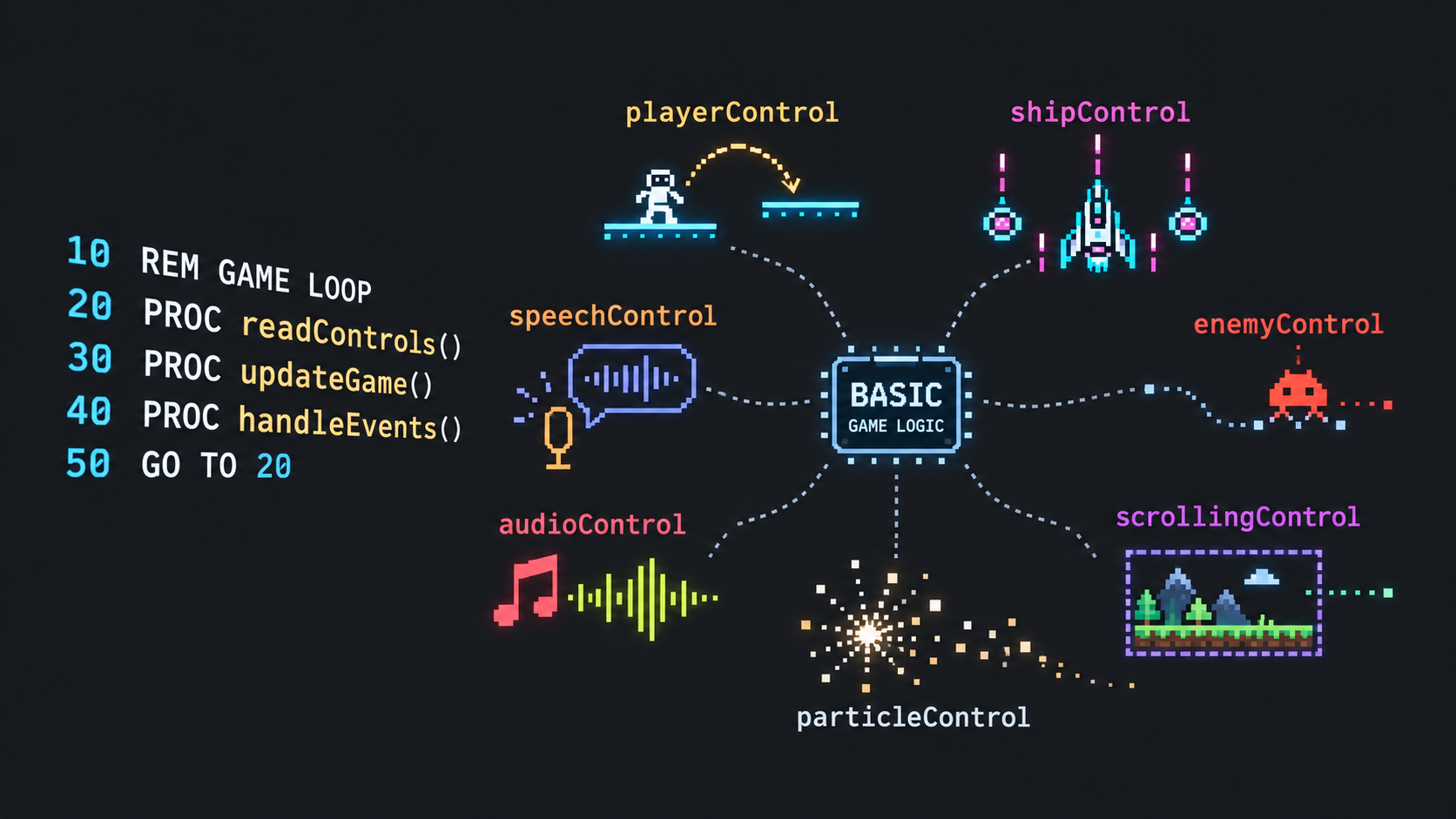
The possibilities and extra work that come with combining drivers: shared conventions, clear responsibilities and cooperation that stays optional.
Read article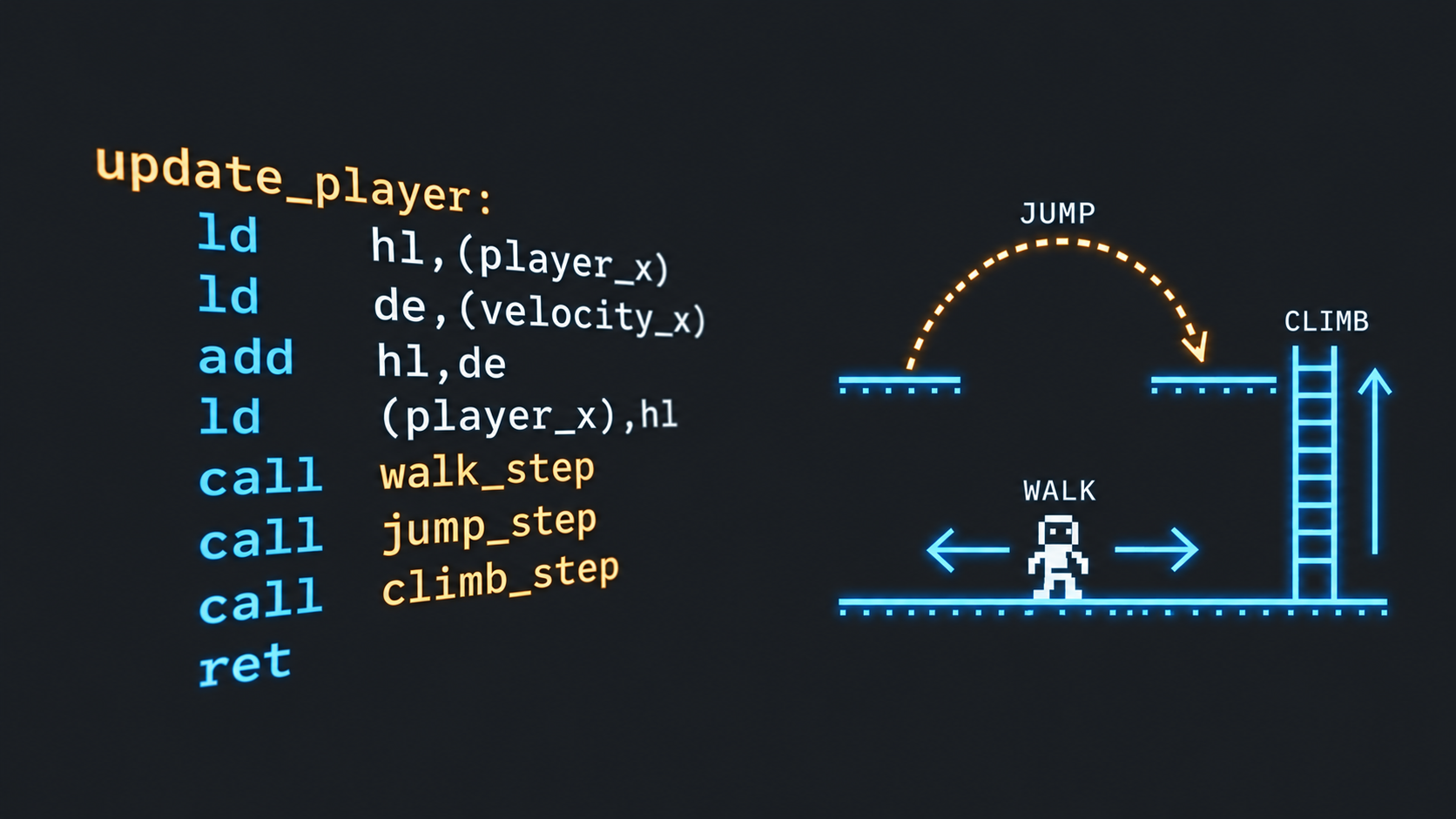
How a player-control problem in The Lost Caverns grew into a wider plan to help BASIC developers build games for the ZX Spectrum Next.
Read articleMovement, ladders, graphics and the value of small, clear steps: lessons from building my first ZX Spectrum Next game.
Read article
Choosing which work belongs in BASIC and where a focused machine-code driver can help a game respond more consistently.
Read article