I have always wanted to develop my own game. The Lost Caverns has given me a way to pursue that ambition, and it continues to be a substantial learning experience. Getting a character onto the screen is a beginning; making the world around that character behave consistently is where much of the work happens.
A game is a collection of connected systems
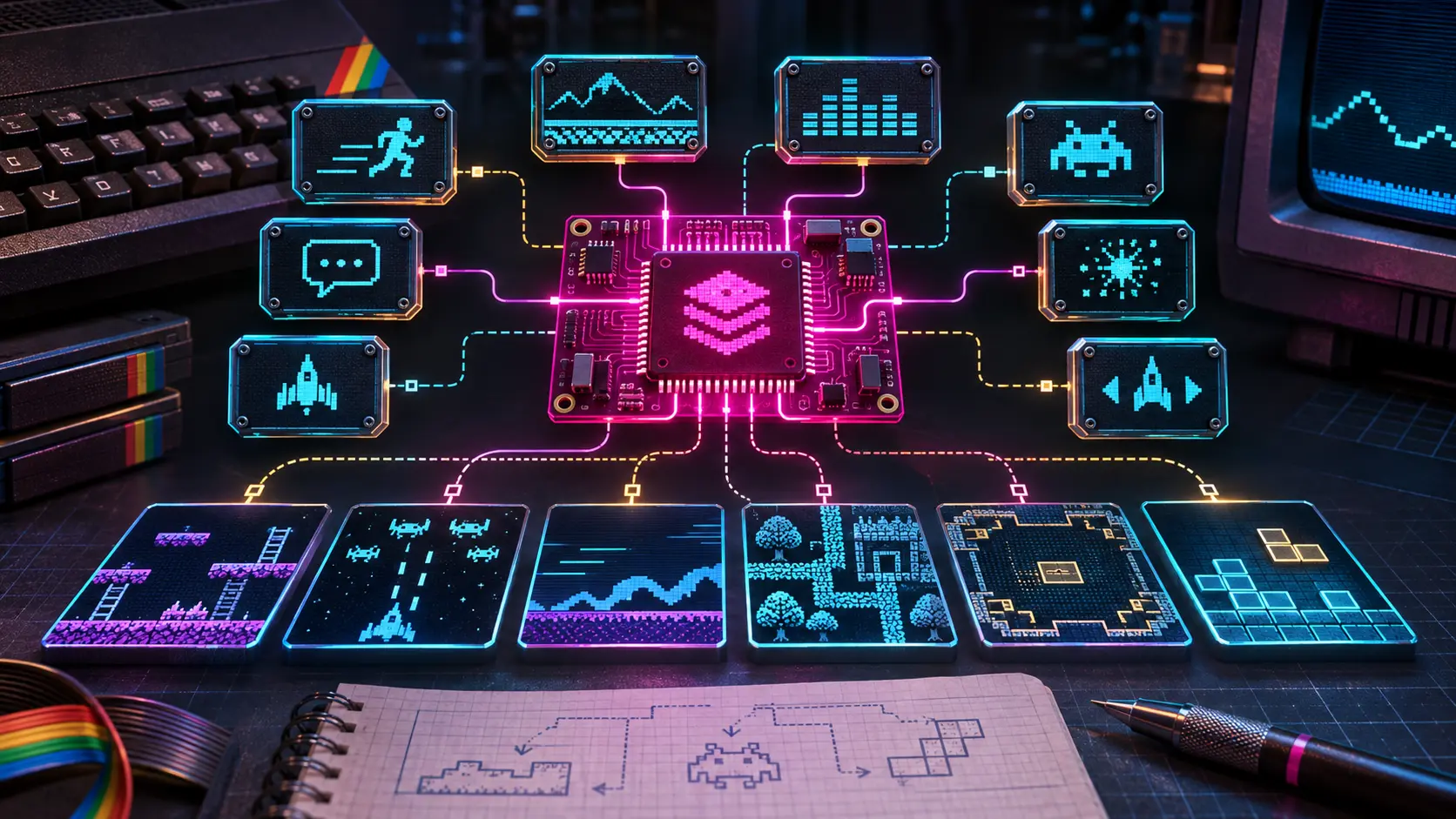
A platform game needs graphics, level data, movement, collision detection, animation and sound to work together. A player may seem to be making one simple jump, but the programme also has to decide whether there is a ceiling above, a ladder nearby or a safe place to land.
The Lost Caverns has made those connections much clearer to me. A change to one system can affect another, so an improvement needs to be considered in the context of the whole game. Smooth movement is valuable, and it also has to agree with the scenery and with what the player sees.
Small changes make problems easier to understand
There are many tempting features to add to a game. Breaking the work into smaller parts gives each change a purpose and makes the result easier to inspect. When something behaves differently, there is a clearer connection between the change and the effect on screen.
Keeping a working version also matters. During the development of playerControl, changes to jumping and ladders sometimes affected behaviour that had already been working. A dependable reference point made it possible to compare the results, recover the useful behaviour and continue from there.
Decide what the player should experience
Ladders are a good example of how a simple feature becomes a set of decisions. What should happen when the player reaches the top? Can they jump away halfway up? Should landing on a ladder top look like standing on a platform, or should the character immediately begin climbing?
Working through those questions helped define the behaviour before another change was made. The same applies to jumping, super-jumping and completed falls. Clear expectations give a test a useful purpose: I can check whether the character behaves as intended in a particular situation.
Test the same transitions after a change
A ladder test should cover more than climbing its middle. Approaching from the side, arriving at its top and jumping away each ask a different question. The intended behaviour needs to remain clear in all of those situations, including which animation the character should display.
That suggests a small repeatable test area. A floor, a wall, a ladder and a few platforms can expose several useful transitions without introducing an entire level’s complexity. After one change, repeat the earlier checks as well as the new one. The purpose is to notice when an improvement has disturbed a behaviour that was already dependable.
Acceptance criteria do not need to be formal or lengthy. “Landing on the ladder top leaves the player standing normally until climbing is requested” is already more useful than “make ladders better”. It explains what to observe and gives a future change something concrete to preserve.
Graphics and level organisation are part of the programme
Sprites, palettes, animation patterns and level files all need an organised place in the project. The programme has to load the appropriate material, understand which patterns belong to a character or world, and keep visual changes in step with the game’s behaviour.
That work has encouraged me to think beyond individual pictures. A clear file structure and consistent naming make it easier to find the right asset and understand how it is being used. They also provide a better foundation for adding more levels and worlds as the game develops.
Concept art and game assets answer different questions
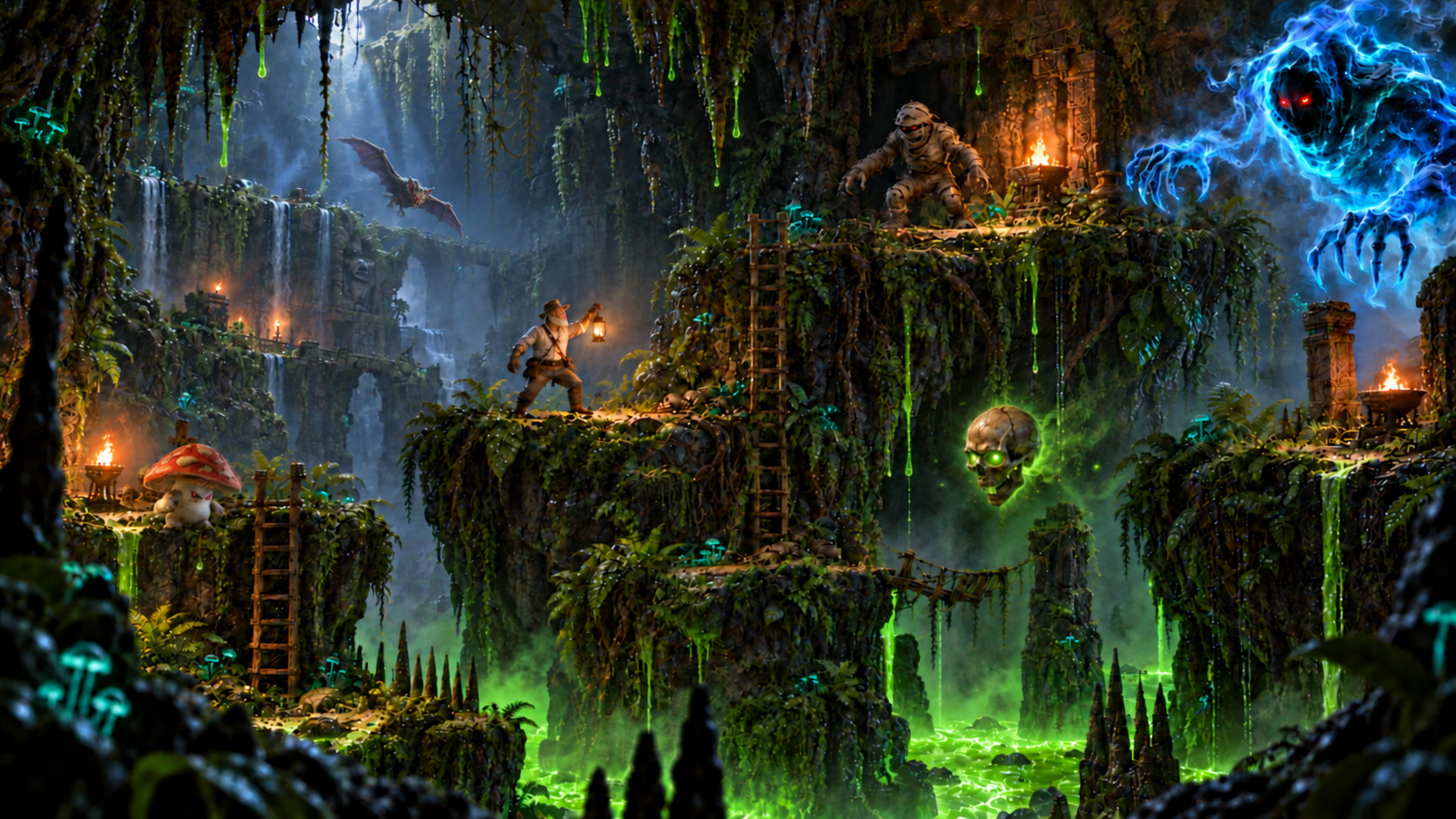
Concept artwork helps establish the atmosphere and identity of the adventure. A runtime sprite or level file has another job: it must load correctly and behave predictably within the programme. Keeping both is valuable, but one should not be mistaken for evidence that the other is complete.
A clear asset name, palette and pattern arrangement makes the connection easier to follow. When a graphic looks wrong, I need to know whether the issue is in the source art, conversion, loading or animation selection. That organisation becomes more useful as the cast and number of worlds grow.
Explaining the work helps make it clearer
Writing a tutorial gives me a reason to explain what a section of the programme does, why it belongs there and how it connects to the game. If a step depends on unexplained earlier work, that becomes much easier to notice when trying to describe it for someone else.
The Lost Caverns tutorial is temporarily hidden while it receives further work. I want the instructions and examples to form a dependable sequence before presenting it as something readers can build alongside me. The project and development stories remain available to explain the game’s direction and progress.