The driver ecosystem began with a practical problem in my first game. I wanted to keep building The Lost Caverns in NextBASIC, but the player’s movement became slower as the programme grew. Finding a way to improve that one part of the game gave me a much broader idea: a collection of drivers that could help other BASIC developers too.
Where it started
The Lost Caverns brings together platforms, ladders, enemies, collectibles and a player who has to move through all of them. As more systems entered the BASIC main loop, controlling the character became increasingly difficult. Eventually, the response was too slow for the kind of platform game I wanted to make.
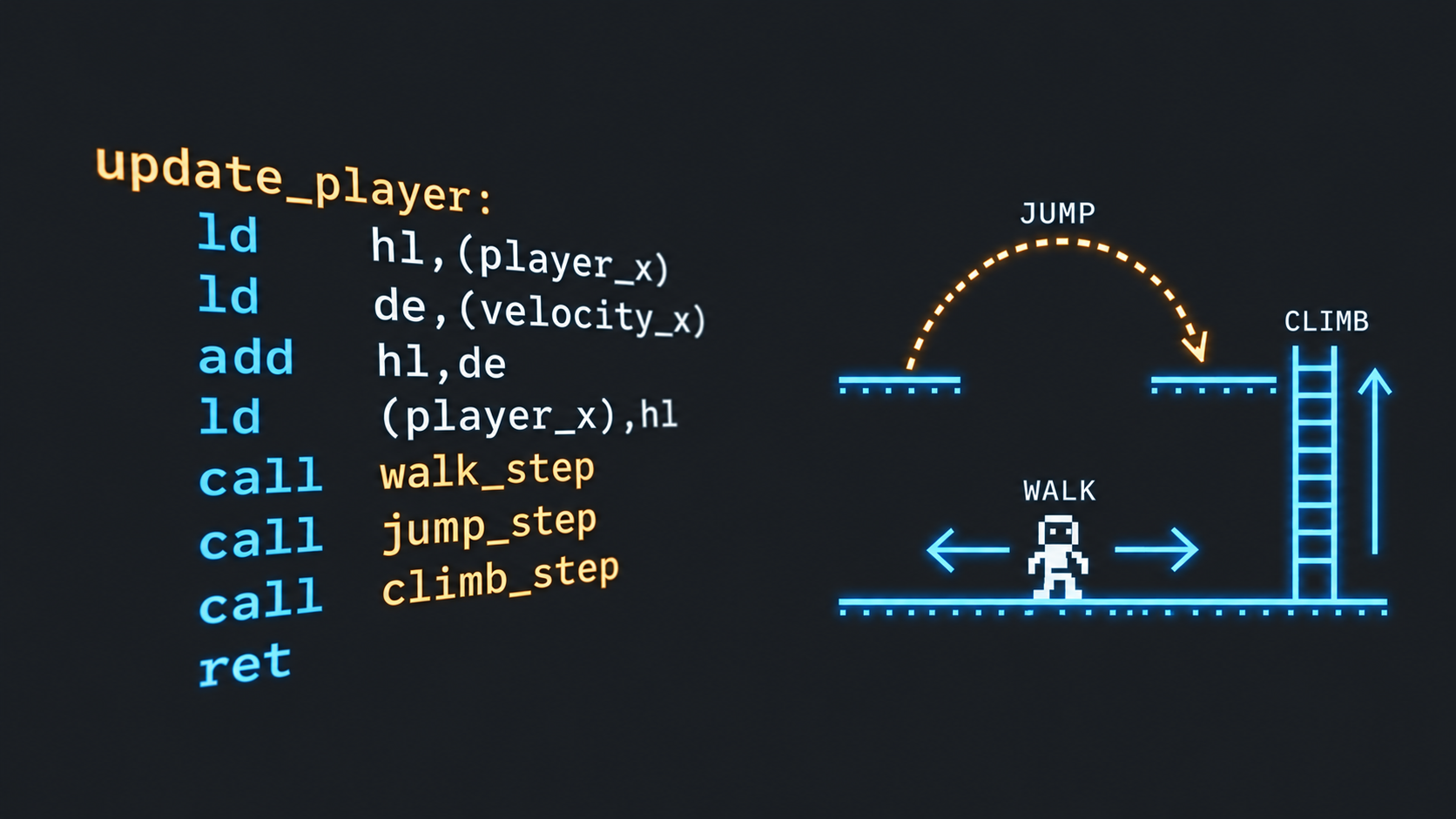
That led to playerControl Driver. Moving the frequent movement and physics work into machine code gave me a way to keep BASIC at the centre of the game whilst improving the player’s response. The driver grew from something the game needed, and the game continues to give that work a practical setting.
BASIC stays at the centre
I want the game developer to be able to use BASIC to organise menus, levels, score, lives and the decisions that make their game their own. A driver can take responsibility for a particular service, with the game supplying its settings and deciding how to use the results.
The aim is to make demanding features more accessible to members of the Next community who primarily use BASIC. Learning assembly can open up more possibilities, but a person should also be able to use a well-documented driver without first having to understand every routine inside it.
Give each driver a clear job
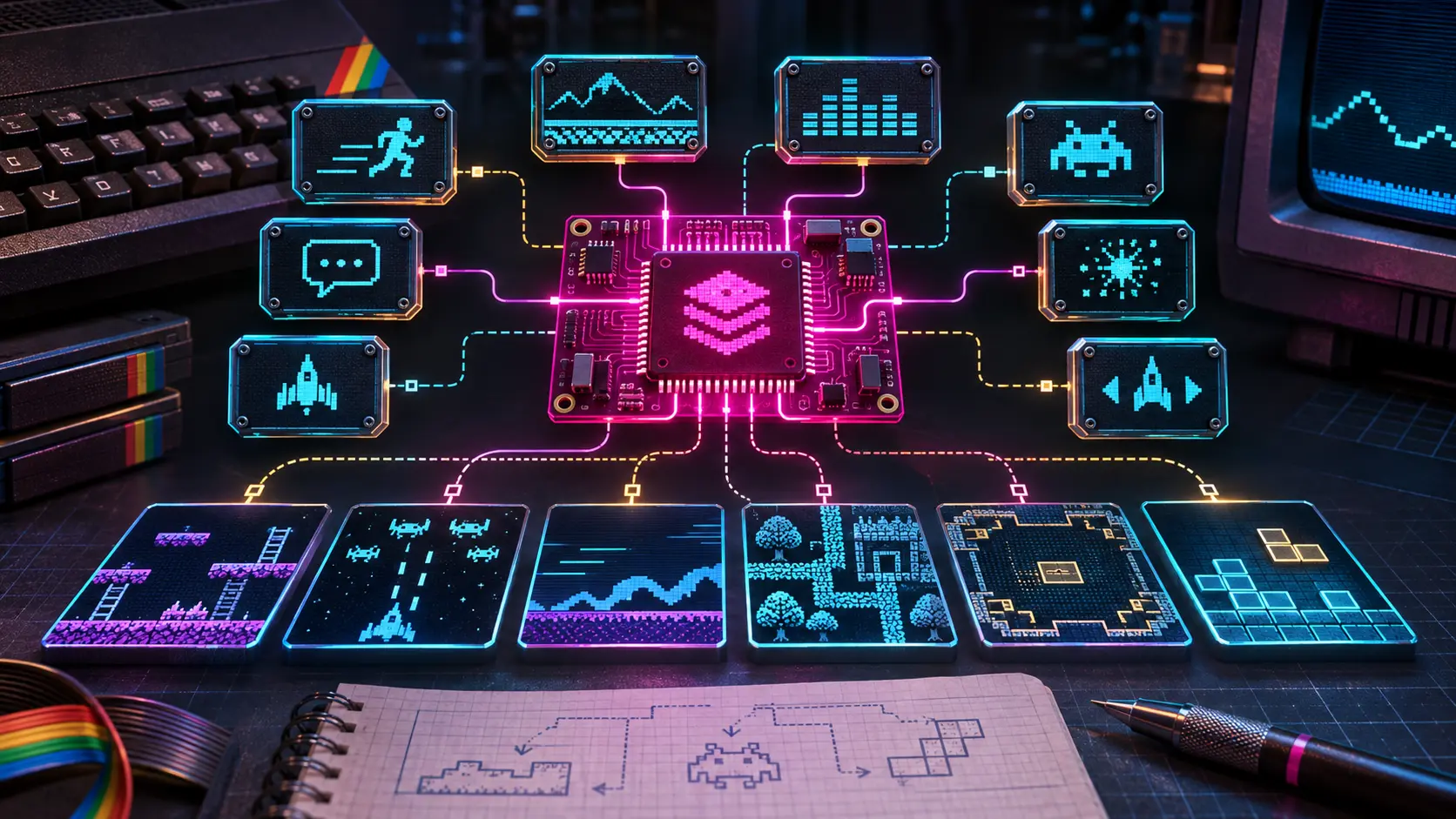
These are the responsibilities I want the ecosystem to cover. The projects are at different stages: some have working, hardware-tested foundations, whilst others are still plans.
- playerControl handles the player’s movement, jumping, ladders and contact with the game world.
- shipControl is the planned free-flight counterpart for horizontal and vertical shoot-em-ups, with independent aiming, configurable projectile weapons and protective or deployable modules.
- enemyControl is planned to handle enemy behaviour, including patrols, pursuit and reactions to the player.
- scrollingControl is being developed around the camera, world geometry and environmental information, including uses where the camera remains fixed.
- audioControl brings together music and sound effects, with positional audio among its future plans.
- particleControl is intended to provide visual effects such as sparks, trails and bursts.
- speechControl is currently a gaming project for spoken output and short voice commands. Later development is intended to extend speech control to the Next itself.
- printControl is a system-driver idea for printing, extending the collection beyond game features.
Build the collection in stages
An ecosystem needs more than a list of interesting features. Each driver needs a manageable first version, useful settings, clear documentation and a reliable way to work alongside a game. Later versions can then build on that foundation.
I also want each driver to have a clear responsibility of its own. A game should be able to choose the services it needs, and planned connections between drivers should be introduced when the relevant parts are ready to work together. That leaves room to develop the collection gradually, without treating future integration as something already complete.
The broader designs also need shared conventions for cooperation. World and camera information comes from scrollingControl; playerControl owns the resulting player movement and collision response. BASIC retains game rules and authoritative state, including lives, health, score, inventory and respawning. Planned connections must preserve those responsibilities.
Show what is available and what has been proven
Version 1 of playerControl is released. Its documentation needs to remain useful to someone downloading that version, even as the V2 design grows. A future feature list should not silently become the instructions for the current stable release.
Other projects have different kinds of evidence. A hardware-tested communication milestone establishes something narrower than a finished speech system. An agreed camera architecture establishes design direction without proving that every planned world feature already works. Recording those differences helps a reader judge what they can use now.
This is why the website separates a project’s intended purpose from its development record. The Project page explains what it is meant to deliver; the Ideas sections and stories record the steps, limitations and next tasks. A status label is useful, but it cannot carry all of that detail.
Make the first useful example small
A reusable service needs an approachable entry point. I want a developer to be able to install it, supply the necessary assets and settings, and see one clear behaviour before exploring the full feature set. A small BASIC programme makes those dependencies easier to recognise.
The same example should show how to stop and restart cleanly. Those steps are easy to overlook in an impressive demonstration, but they matter to a game with menus, repeated attempts and level changes. Good examples are part of making the ecosystem useful beyond my own projects.
Share the reasoning as well as the results
The website gives me a place to explain why these projects exist, where they currently stand and what I want to do next. The Ideas pages follow the individual projects, and the tutorials provide room to show how they can be used.
My hope is that the collection will make it easier to turn a BASIC game idea into something enjoyable to play. The Lost Caverns started that process, but the wider aim is to create useful building blocks that other developers can adapt to their own games.