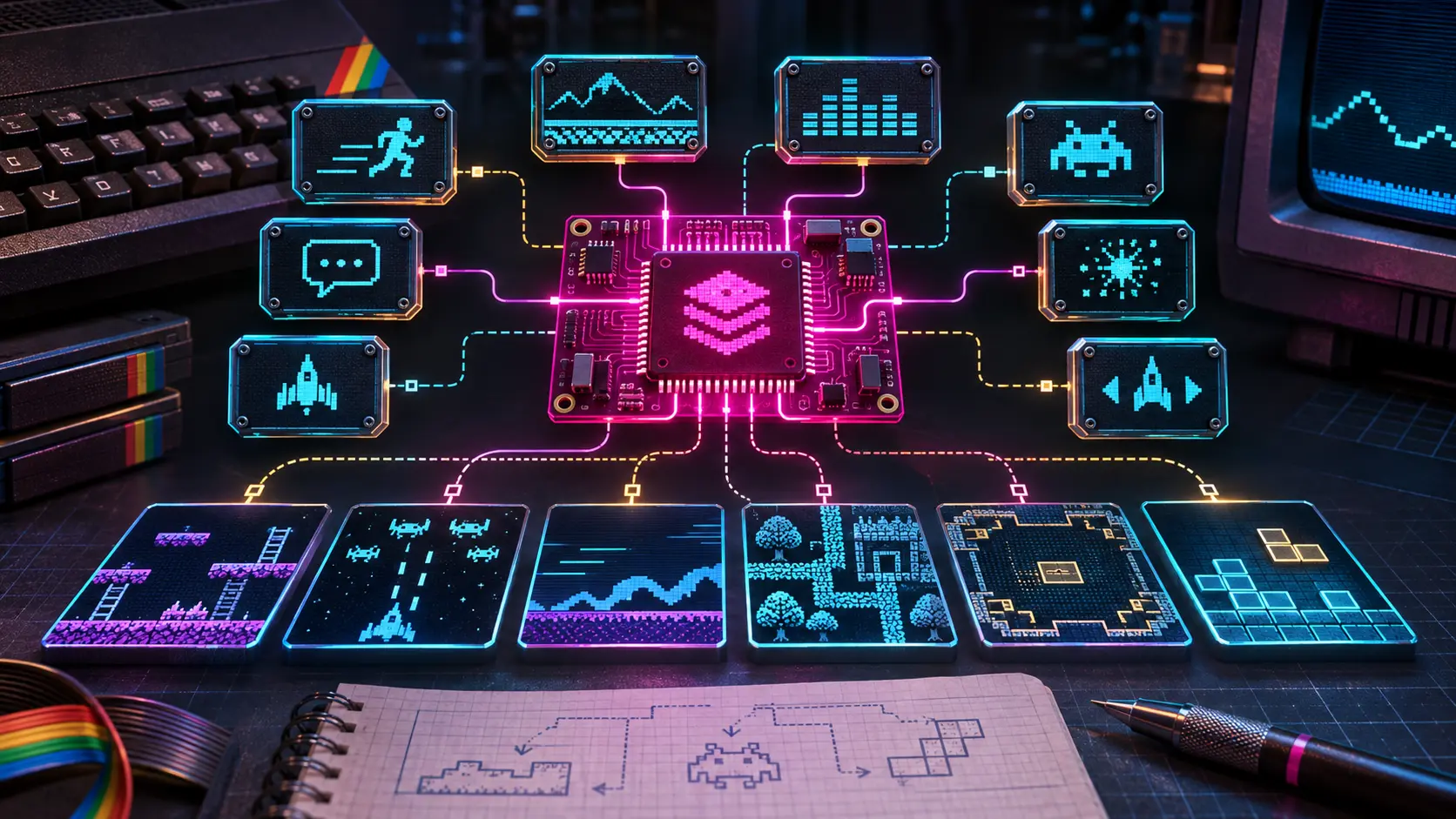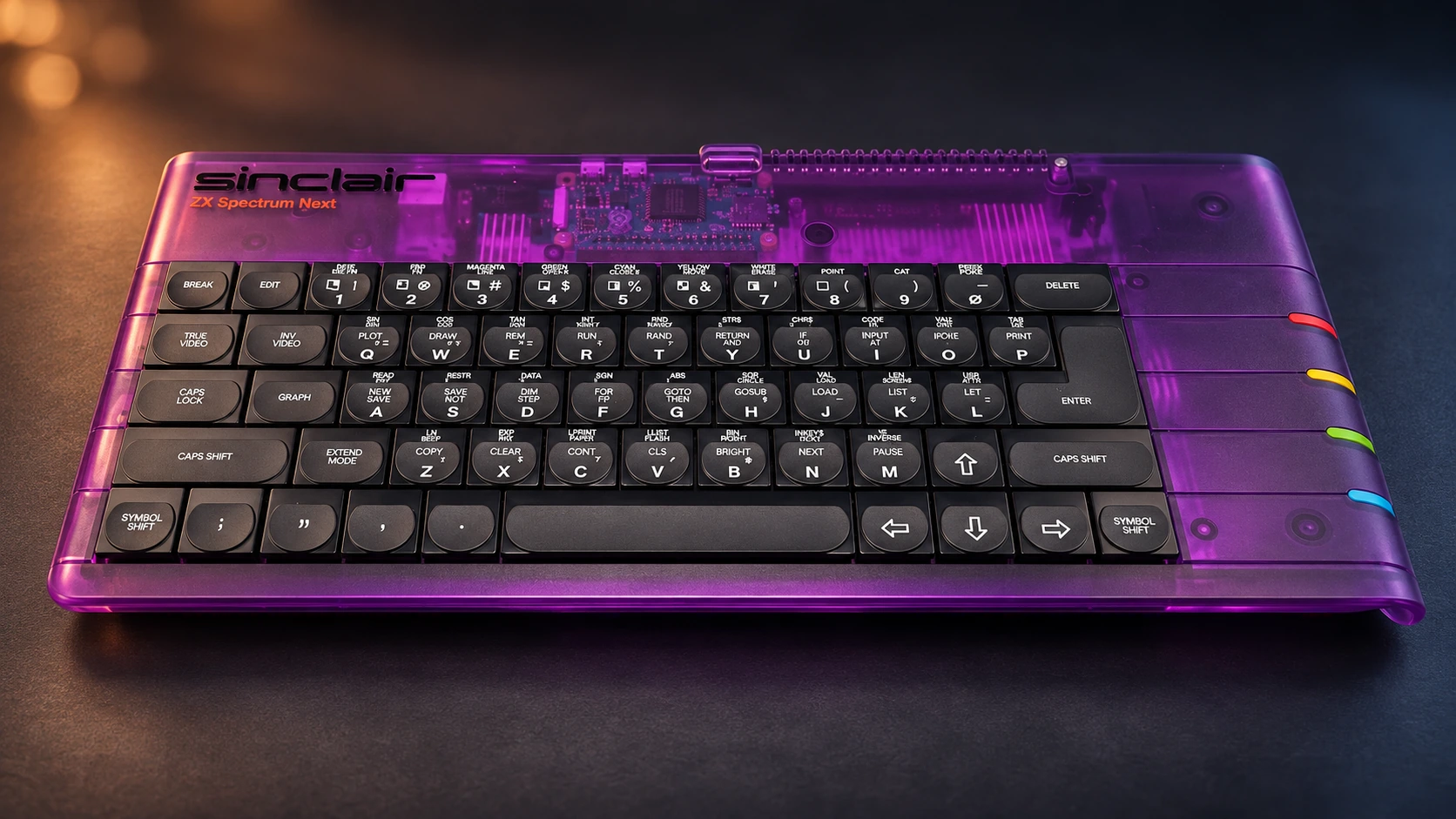
The Lost Caverns began as a game I wanted to make. It has also become a source of tools, experiments and driver ideas. That can be productive, provided the tools continue to help the game move forward.
A real problem gives a tool its purpose
It is easy to imagine an impressive general-purpose tool before knowing exactly what it needs to solve. The Lost Caverns gave playerControl a much more specific beginning. As the BASIC game grew, player response became too slow. Improving that response was necessary for the platformer to remain playable.
The immediate question was whether the frequent control and physics work could move into assembly whilst BASIC retained the game’s structure. That gave the driver a concrete purpose and a real setting in which to judge it. Walking, jumping and ladders were things the game needed, rather than features added simply to lengthen a specification.
This is one advantage of developing a tool alongside an actual project. The game exposes awkward situations that a tidy demonstration might omit. It asks what happens at a ladder top, beside a wall, after a fall or when the player changes direction unexpectedly. Those questions help shape a useful service.
Find the smallest complete journey
A tool can appear finished in isolation and still be difficult to use. For me, a more convincing milestone is a small complete journey: obtain the files, load the assets, install the driver, configure it, run a short example and stop or restart cleanly. Every step matters to the person trying it for the first time.
That journey should be achievable without understanding the whole game. The full Lost Caverns programme contains context that a new user does not have. A focused BASIC example removes that dependency and shows which parts belong to the service and which are choices made by the game.
Documentation then has a practical test. Could someone follow it with the published files and get the described result? A missing sprite file, an unexplained setup step or an assumption about an earlier experiment can stop that journey just as effectively as a code fault. The example is part of the product.
Separate the experiment from the baseline
Experiments need freedom. A movement change may be worth trying even when I do not yet know whether it will feel better. The working baseline needs different treatment: it should preserve known behaviour so that a new experiment can be compared with something dependable.
That distinction is particularly valuable when one adjustment affects several systems. A change that improves jumping might disturb ladders or landing. Keeping a reference build makes it possible to ask a precise question: which behaviour changed, and was that change intended? Without that comparison, several unrelated edits can become difficult to untangle.
The same applies to assets. A concept image, an enlarged sprite preview and the actual sprite file serve different purposes. A convincing illustration can communicate a character, but the game must still load the correct patterns and palette. Keeping those deliverables clearly named prevents artwork progress from being mistaken for runtime progress.
Know when a game-specific solution is enough
Not every useful routine needs to become a reusable driver. A particular puzzle rule, a one-off menu or a level-specific sequence may belong comfortably in the game. Generalising it can introduce settings, documentation and compatibility work that are larger than the original problem.
A good candidate for reuse solves a repeated problem with a reasonably stable boundary. Movement is a strong example because another game can supply different graphics, levels and settings whilst needing many of the same physical behaviours. The story, scoring and consequences can remain its own.
The boundary also prevents the tool from swallowing the game. playerControl should not need to know the entire adventure to move its player. Equally, BASIC should not have to reproduce the driver’s internal movement decisions. The two parts need an understandable agreement about responsibilities.
Keep the growing ecosystem honest
The wider driver ideas grew from asking what else could help BASIC developers: sound, scrolling, enemies, speech and other services. Those possibilities are exciting, but a planned collection and a completed collection are different things. The website needs to show which parts are available, which have passed particular hardware checks and which remain design work.
Version 1.0 of playerControl provides a hardware-tested movement foundation, but a standalone driver download has not yet been published here. Version 2 explores broader movement and interaction requirements. That evolution should preserve useful V1 behaviour rather than treating the tested baseline as something to discard. When a release is ready, its documentation will need to match the version a developer can actually download.
Project status helps communicate that distinction, but it cannot replace detail. “In development” does not tell a reader whether a feature is merely agreed, implemented in a test or proven within a game. Development stories can record those smaller steps and explain why the next one follows.
Return the tool to the game
After a useful tool milestone, I want to bring the result back into the project that prompted it. Does the character now respond as intended? Is the BASIC programme clearer? Can another feature be added without losing the improvement? Those are stronger measures than the number of options in the driver.
The Lost Caverns is currently on hold, so this return to the game is a next step rather than a claim about work happening today. Pausing the game does not turn the driver’s hardware checks into game integration, and it does not make the planned connection complete.
A small playable section can be especially valuable. It brings assets, movement, collision and game rules together in a setting that can be repeated. The tool gains realistic feedback, and the game gains a dependable foundation for further work.
The balance will not always be perfect. Some tool work opens possibilities that were not in the original plan, and some ideas need to wait. The useful discipline is to keep asking what the next piece of work enables. The Lost Caverns is both a game worth finishing and a practical place to learn what the wider tools should do.