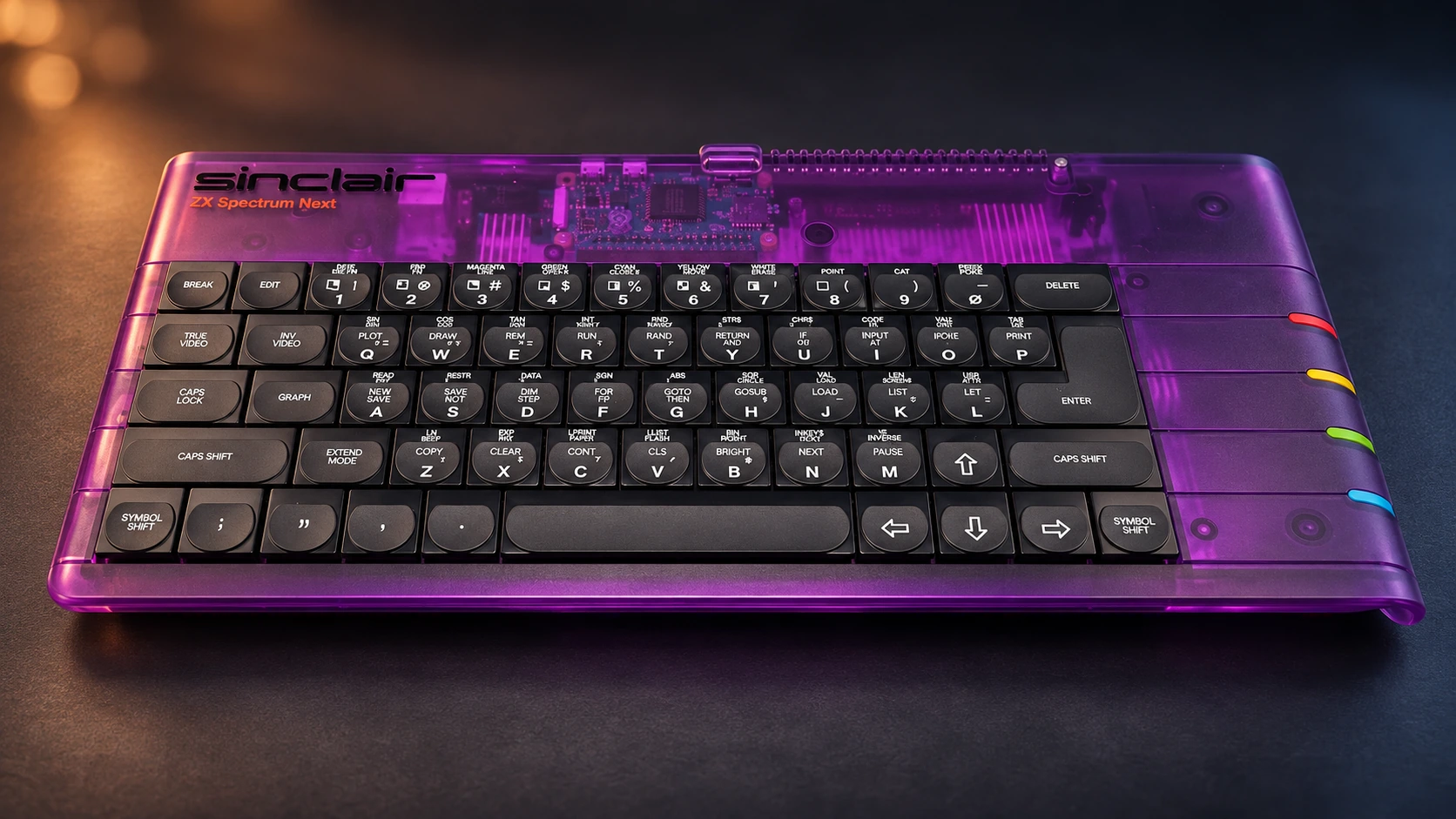
AI can be a useful development partner. It can help organise an idea, examine a fault from several angles and turn a long conversation into a clearer test plan. It can also produce convincing nonsense. Working on the Spectrum Next makes that contrast especially visible because an answer that looks plausible on a modern screen still has to survive a very particular machine, toolchain and set of responsibilities.
Start with the problem, not the promise
The most useful conversations begin with a real problem. playerControl grew from movement in The Lost Caverns becoming too slow and difficult to judge. speechControl began with the question of how a Next game might request speech from the Pi. audioControl has needed careful checks across different playback paths and video timings. In each case, the project provides a purpose against which a suggestion can be judged.
AI is good at widening the first view of that problem. It can propose a division of responsibilities, list transitions that deserve a test and point out information a public interface will need. That is most valuable when the result becomes a question to investigate, rather than an answer accepted because it sounds complete.
A large feature list is not evidence. An agreed interface is not an implementation. A passing isolated test is not a released driver. Keeping those statements separate is part of using the assistance responsibly.
Plausible syntax can still be invented syntax
The Spectrum Next sits at the meeting point of Z80 and Z80N assembly, NextZXOS drivers, NextBASIC, hardware registers and several supporting tools. That is a rich environment for an AI system to combine two genuine ideas into one instruction or command that does not exist.
An invented register name can look perfectly reasonable. A routine may use the right vocabulary whilst assuming the wrong calling convention. NextBASIC syntax can be confused with another BASIC dialect, and a modern file or process assumption can be carried into a machine where it does not apply. The more fluent the explanation, the easier it is to overlook the mistake.
The defence is not a better-sounding prompt. It is checking the result against the correct documentation, the existing source and the target toolchain. Small assembly probes, minimal BASIC programmes and exact error reports expose an invented assumption much more quickly than adding it to a larger build.
The hardware does not share the assumption
An emulator or a desktop-side test can help during development, but it does not establish every property of the real machine. Memory mapping, interrupts, driver relocation, UART communication, audio timing and 50 or 60 Hz behaviour each have details that need appropriate evidence.
speechControl provided a useful example. Before there was speech, the low-level driver foundation had to install safely, preserve its memory mapping and communicate reliably. A transfer could appear successful whilst leaving a zero-byte service file on the Pi side. The protocol was not the failing part; the deployment assumption was. The fix came from inspecting the actual result, not from trusting the earlier success message.
The project has since proved its M3A speech request and a separate synthesis and DAC playback route. Those remain distinct results: M3B has not yet integrated them into one audible driver-controlled request. Development is currently on hold while I investigate Alpine Next after the upgrade, which does not remove or extend the evidence already recorded.
That lesson applies more widely. A design can be sound and still meet a different fault during installation. A feature can work at 50 Hz without that proving 60 Hz. Hardware evidence should name the build, the test and what passed, rather than turning one result into a broad claim.
Regressions are part of the cost
AI can make a change quickly. It can also disturb behaviour that was already dependable. Movement work has shown why a known baseline matters: improving a ladder transition, fall measurement or jump rule can affect animation, facing direction or another route through the same state.
That makes review and regression testing part of the development cost. A useful change is not merely the one that fixes the reported case. It must also preserve the earlier cases that define the current build. For player movement, that means returning to ordinary walking, floor and platform jumps, ladder entry and exit, completed falls and the enabled and disabled super-jump paths.
The same discipline applies outside movement. Audio needs its known playback paths repeated. A driver that starts correctly should also stop and restart correctly. A generated site change must preserve unrelated pages and public claims. Speed of producing an edit does not remove the time needed to understand and verify it.
Our process is a conversation with checkpoints
The development process has worked best as a repeated cycle. I describe the behaviour I want and what happened on the real machine. The AI helps turn that evidence into a narrower explanation, a changed build or a more precise set of checks. I run those checks and report the result, including the parts that failed. The next step is based on that evidence.
That conversation is useful because it can retain the history of a difficult fault. The M3A4 speech request is meaningful because the exact sentence and settings reached the Pi, its acknowledgement returned and recovery completed cleanly. The M2E timing record is similarly specific: 41 frames for a cold start and 21 for a warm reconnect on the tested setup. That detail helps prevent the next suggestion from silently returning to an earlier assumption or turning a measured milestone into a broader claim.
Checkpoints also give us somewhere safe to stop. A hardware-proven foundation can remain the reference whilst a new branch investigates a wider feature. A failed experiment can be discarded without rewriting the history of what worked. The process is collaborative, but the evidence still comes from the source, the tools and the machine.
Transparency is better than a false choice
Using AI does not mean that the work has no author, and doing work by hand does not make it automatically correct. The useful questions are what assistance was used, which decisions were made by the developer, what sources shaped the result and what was actually tested.
I am responsible for the direction of these projects, the behaviour I accept and the claims I publish. AI can help draft code, documentation and tests, but it cannot transfer that responsibility. If a generated change breaks a game or misrepresents a feature, saying that an AI suggested it does not make the outcome someone else’s problem.
Being open about the assistance also helps a reader judge the process. The aim is not to attach an AI label to every sentence. It is to avoid presenting generated work as an unexplained personal discovery, especially where the collaboration materially affected the design or implementation.
Attribution and licences still apply
AI assistance does not erase the origin of existing work. playerControl builds on Simon N Goodwin’s SpriteHax foundation, and that credit remains important whether a later explanation or edit was produced with AI help or without it. Documentation, example code, libraries, artwork and other source material retain their authorship and licence conditions.
That means checking whether material can be reused, keeping required notices and distinguishing inspiration from copied implementation. A generated answer may not identify every source it has blended into a suggestion. The developer therefore has to review provenance rather than assuming that new-looking output is free of obligations.
Where the origin is unclear, the safe response is to rewrite from the project’s own requirements or consult an identified source with suitable terms. Attribution is part of the engineering record, not a decorative paragraph added after release.
The responsibility remains human
AI is most helpful here when it increases the number of useful questions and reduces the effort of organising evidence. It is least helpful when confidence replaces verification. The Spectrum Next is very good at exposing that difference: the code either assembles, the file either arrives, the driver either preserves the machine state and the behaviour either survives the complete check.
I want to continue using the collaboration where it helps, whilst making its limits visible. That means small tests, current documentation, real-hardware checks where they matter, careful release claims and a willingness to reject a fluent answer. The assistance can be shared. Authorship, judgement and responsibility cannot be delegated.