
Your place is saved automatically on this browser.
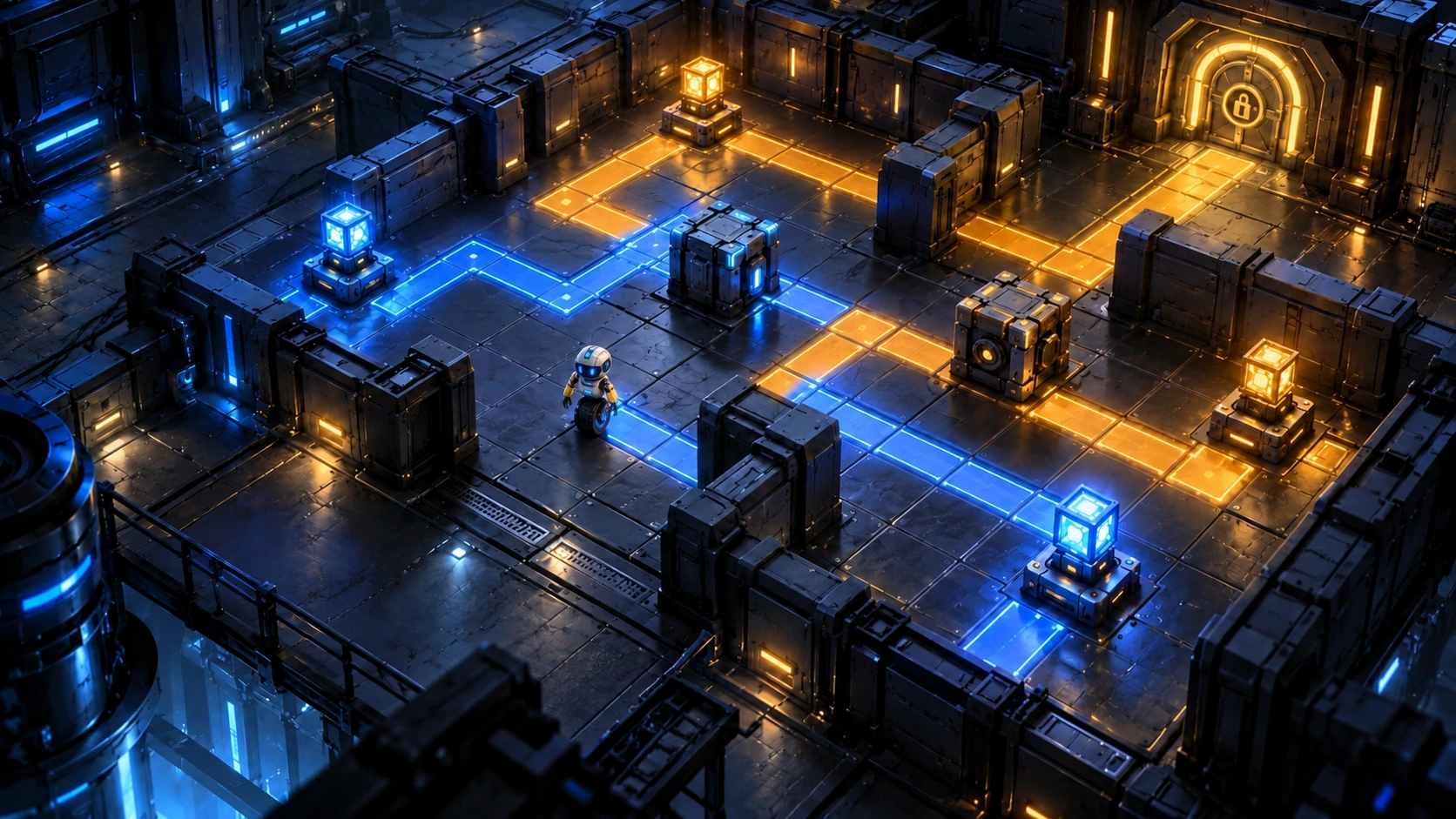
At the end of this tutorial revision, the stable development baseline is PHASELOCK v0.13. The player assets exist, the robot can move one logical tile per key press with a visible lean/travel/recover animation, the sprite can use the border, and a 20×16 logical grid now owns the player position.
| Component | Current state |
|---|---|
| Game design | Core Blue/Amber phase system and scoring/backtracking now implemented; later puzzle rules remain staged. |
| Player art | 16 directional lean patterns; current .SPR/.PAL accepted for continued development. |
| Input | Q/A/O/P, one press per tile with release gating. |
| Animation | Lean stationary, travel at maximum lean, recover at destination. |
| Logical position | playerTileX/playerTileY. |
| Animation position | x/y, normalised from tile position after each move. |
| Grid | 20×16 at 16 pixels per tile. |
| Map | levelMap(19,15) stores neutral floor, permanent wall, Blue floor and Amber floor values. |
| Collision | Outer logical boundary, permanent walls and phase-dependent floor legality from levelMap. |
| Phase | Global Blue/Amber state. Every successful LOCKSTEP move flips phase; rejected moves do not. |
Scoring: +10 first visit, -20 revisit; zero is legal; negative score causes CIRCUIT OVERLOAD.
Visited state: visitedMap uses a per-attempt visit-generation marker rather than clearing the full array.
Next tutorial chapter: timer and stability countdown
The next major stage should add time pressure without changing the accepted movement, wall, phase or scoring rules. The timer must pause when the game is paused and reaching zero must trigger the agreed timeout failure/restart path.
That next chapter should document:
- How remaining level time is represented and updated.
- How the shrinking stability bar reflects the same authoritative timer.
- How timeout interacts with movement and phase updates without corrupting current state.
- The exact timeout rule: reaching zero causes the floor failure/lost-life restart sequence.
- How pause freezes the timer as well as gameplay.
- Real-hardware timing tests, including 50/60 Hz considerations if they become relevant.
- Regression checks confirming score, visited state and phase still behave exactly as accepted.