
Your progress
Your place is saved automatically on this browser.
The items in this section are project conventions and implementation assumptions rather than reader prerequisites. They define the technical baseline used by the current PHASELOCK builds. When one of these conventions changes, the relevant later chapter should record the change explicitly.
| Area | Current assumption / convention |
|---|---|
| Target machine | ZX Spectrum Next, tested on real hardware. |
| Language | NextBASIC under NextZXOS. |
| Game structure | Top-down, single-screen puzzle levels. |
| Player tile size | 16×16 pixels. |
| Sprite format | Normal 8-bit 16×16 hardware sprite patterns; 256 bytes per pattern. |
| Player pattern count | 16 patterns: four directions × four pose stages. |
| Palette | Native ZX Spectrum Next 9-bit .PAL file, 512 bytes. |
| Transparency | Project transparency index is decimal 227 / $E3. |
| Primary controls | Q = Up, A = Down, O = Left, P = Right. |
| Movement rule | One successful key press requests exactly one tile of movement. |
| Input gating | The key must return to neutral/released before another tile move is accepted. |
| Current play grid | 20×16 logical tiles, covering the full 320×256 hardware-sprite coordinate area including the sprite border. |
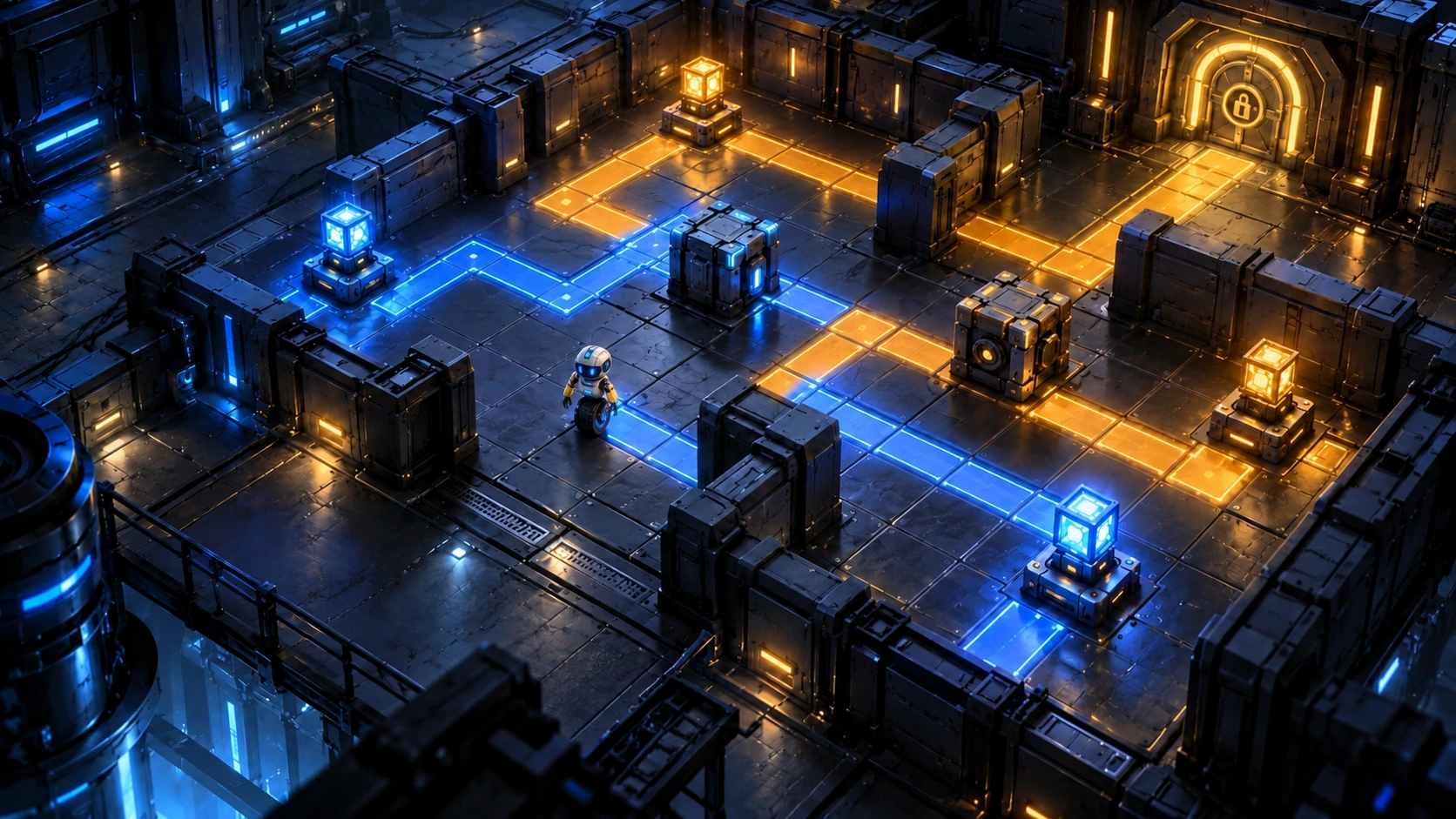
| Current source baseline | PHASELOCK v0.12 Blue/Amber phase-tile reference build. |
Project file layout
Agreed project structure
PHASELOCK/
├── PHASELOCK.BAS            (eventual main tokenised program)
├── PROJECT_MANIFEST.JSON
└── ASSETS/
    ├── GRAPHICS/
    │   ├── SPRITES/
    │   │   ├── PHASELOCK_PLAYER.SPR
    │   │   └── PHASELOCK_PLAYER.PAL
    │   └── TILEMAPS/
    ├── AUDIO/
    └── DRIVERS/
During iterative hardware tests, smaller source files and versioned test packages may be used. The structure above remains the intended project organisation as the game grows.