
Your place is saved automatically on this browser.
1. Let the hardware scale influence the character design
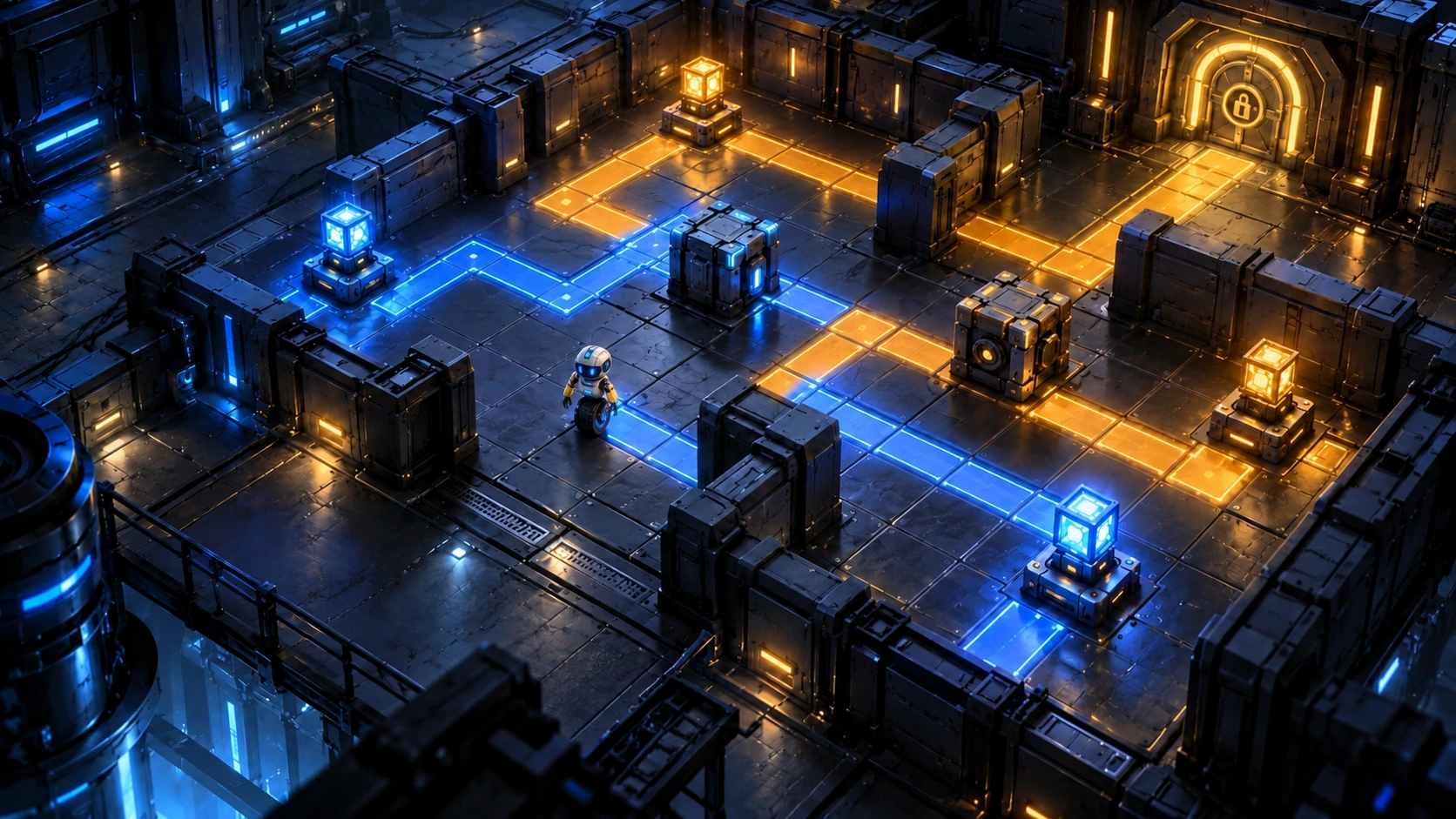
The move from a walking humanoid to a one-wheeled robot removed an animation problem instead of repeatedly patching it. The new design is more readable at 16×16 and gives PHASELOCK a distinctive movement language.
2. Binary assets must be judged as binary assets
Large concept renders can hide problems that become obvious once reduced to actual sprite indices. Reconstruct previews from the written .SPR/.PAL bytes and test them on the target machine.
3. Separate game logic from animation early
The transition from raw x/y movement to playerTileX/playerTileY is the foundation for collision, phase rules and scoring. If the game state remained tied to pixels, every later puzzle system would be more fragile.
4. Reject an illegal move before visual side effects
This rule will become essential in LOCKSTEP. A failed move against a wall must not animate, change the phase, score a tile or trigger an enemy turn. The destination must be approved first.
5. Keep hardware timing tunable
moveDelay and poseDelay are parameters rather than magic timing spread throughout the routine. Real hardware testing can therefore tune movement without redesigning the animation state sequence.