
The Lost Caverns
Last updated: · On hold
Behind the game
The Lost Caverns is my first game: a single-screen platform adventure for the ZX Spectrum Next, begun in NextBASIC. It grew out of a long-standing wish to make a game of my own, partly inspired by Gaz Marshall’s Caverns sprite assets. It has also become a substantial learning journey, from organising graphics and levels to understanding why seemingly small movement problems can take many hardware tests to resolve.
The player explores an underground world of platforms, ladders, enemies, hazards and collectibles. The ambition is 250 levels across five worlds, with character selection. That is the intended scope, not a claim that 250 playable levels have been completed.
A city beneath the caverns
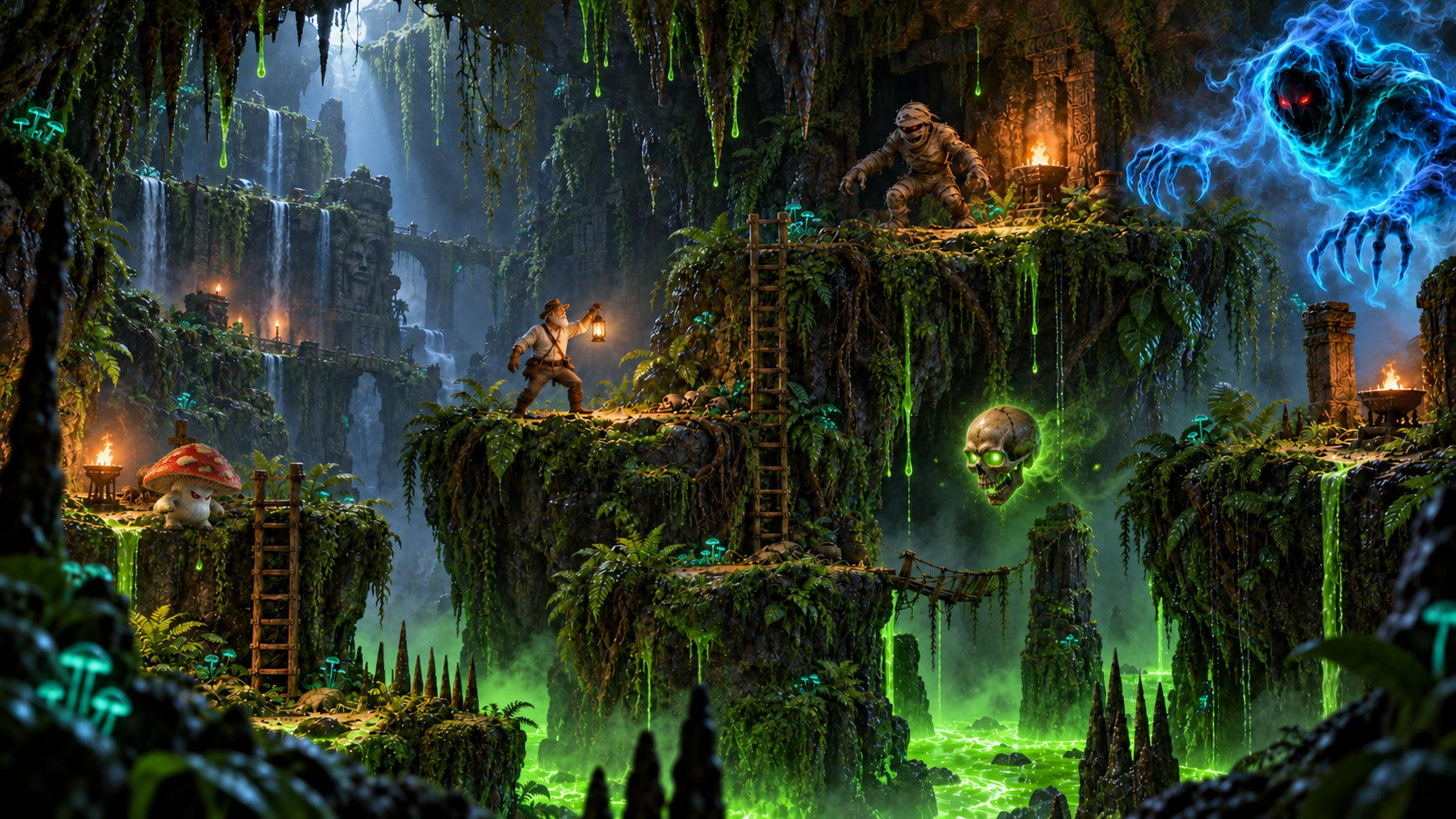
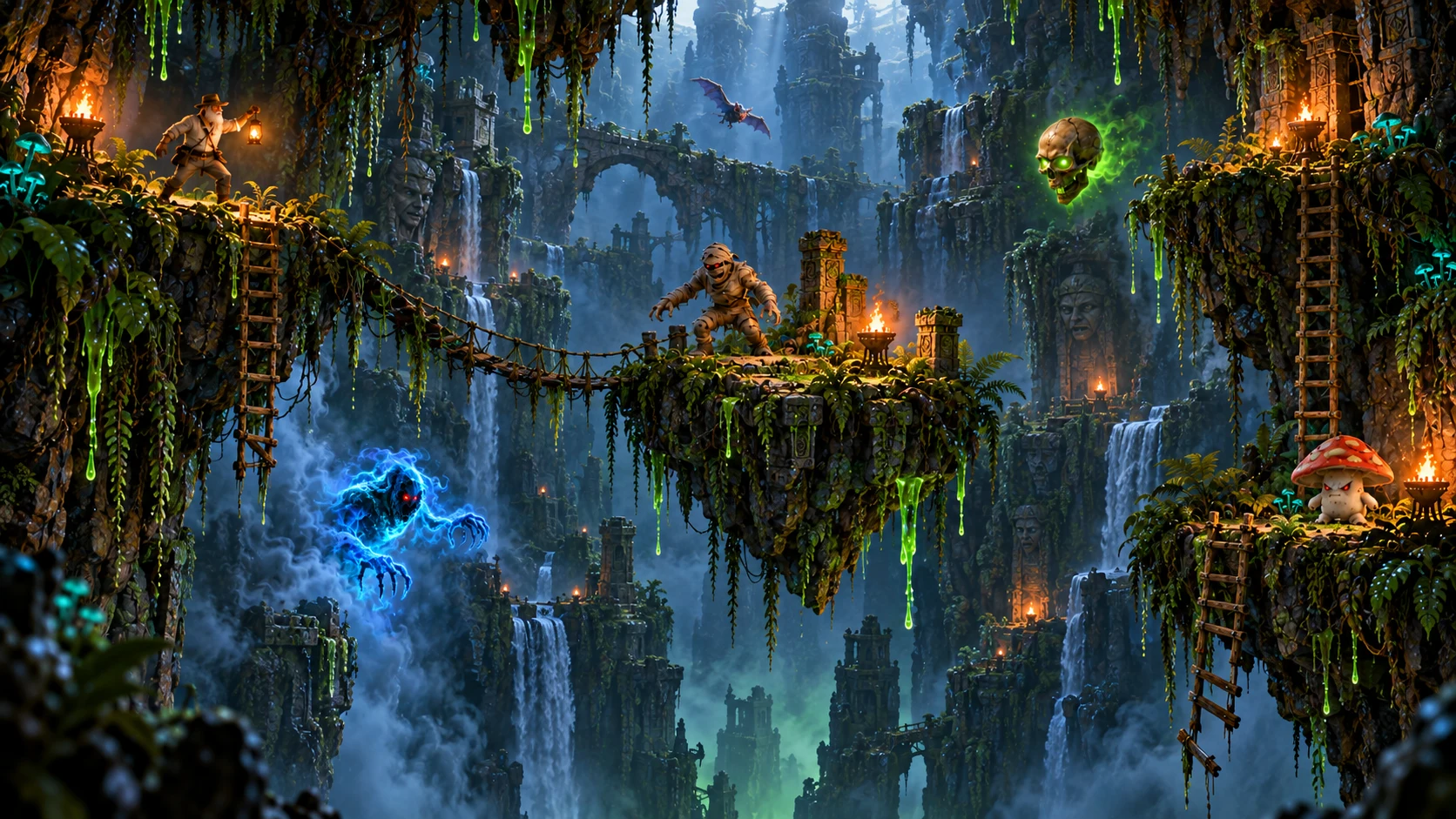
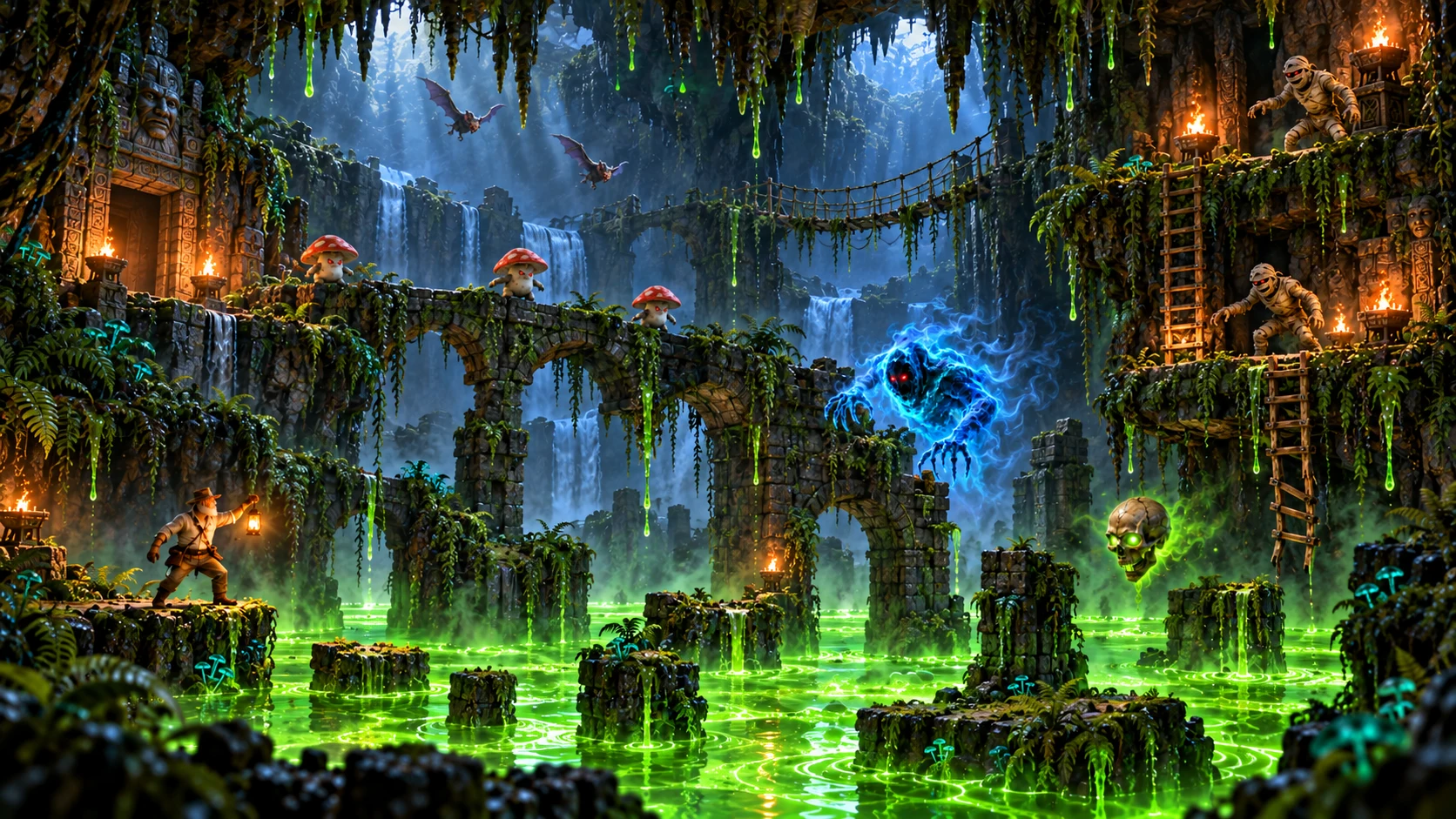
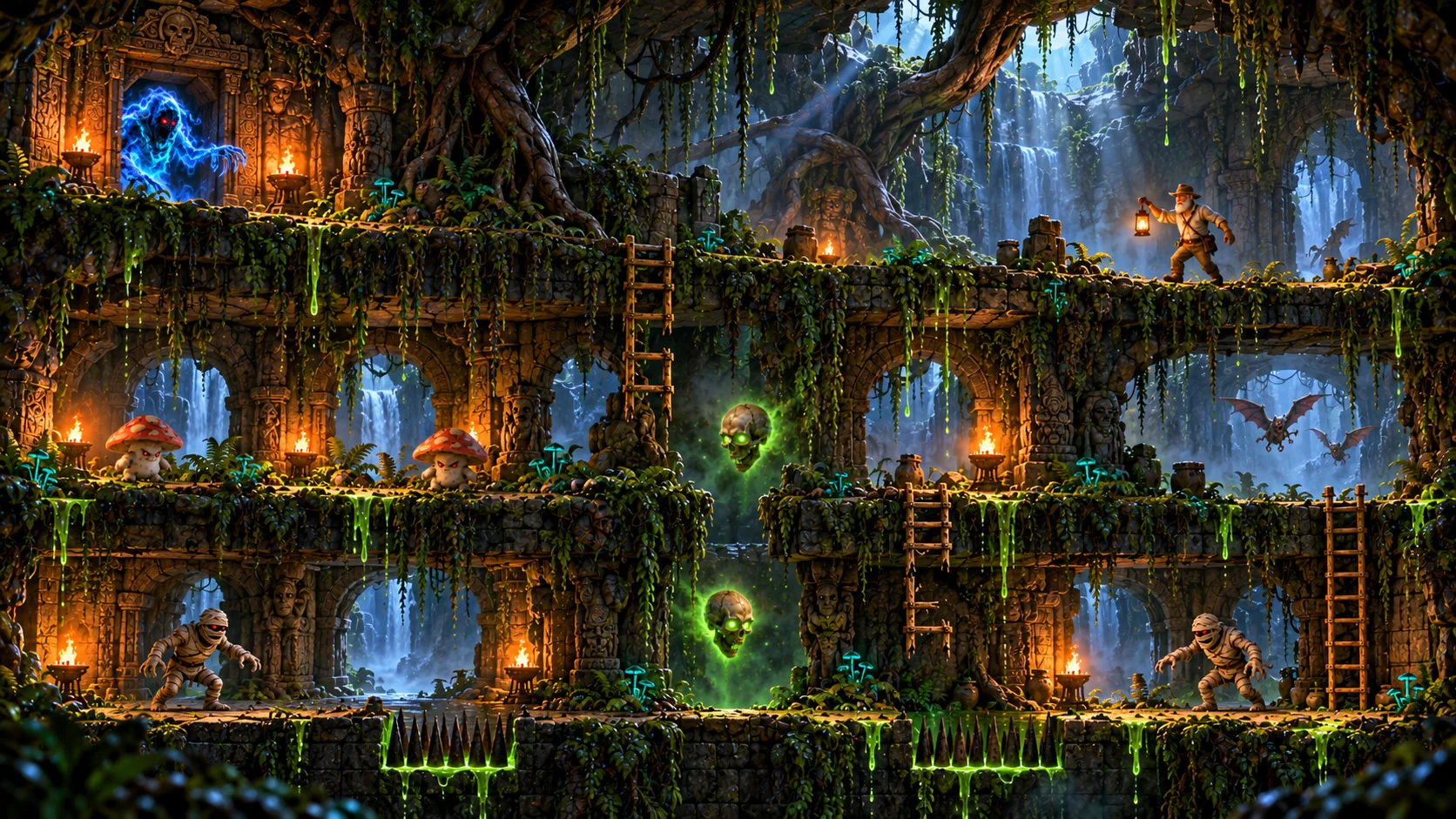
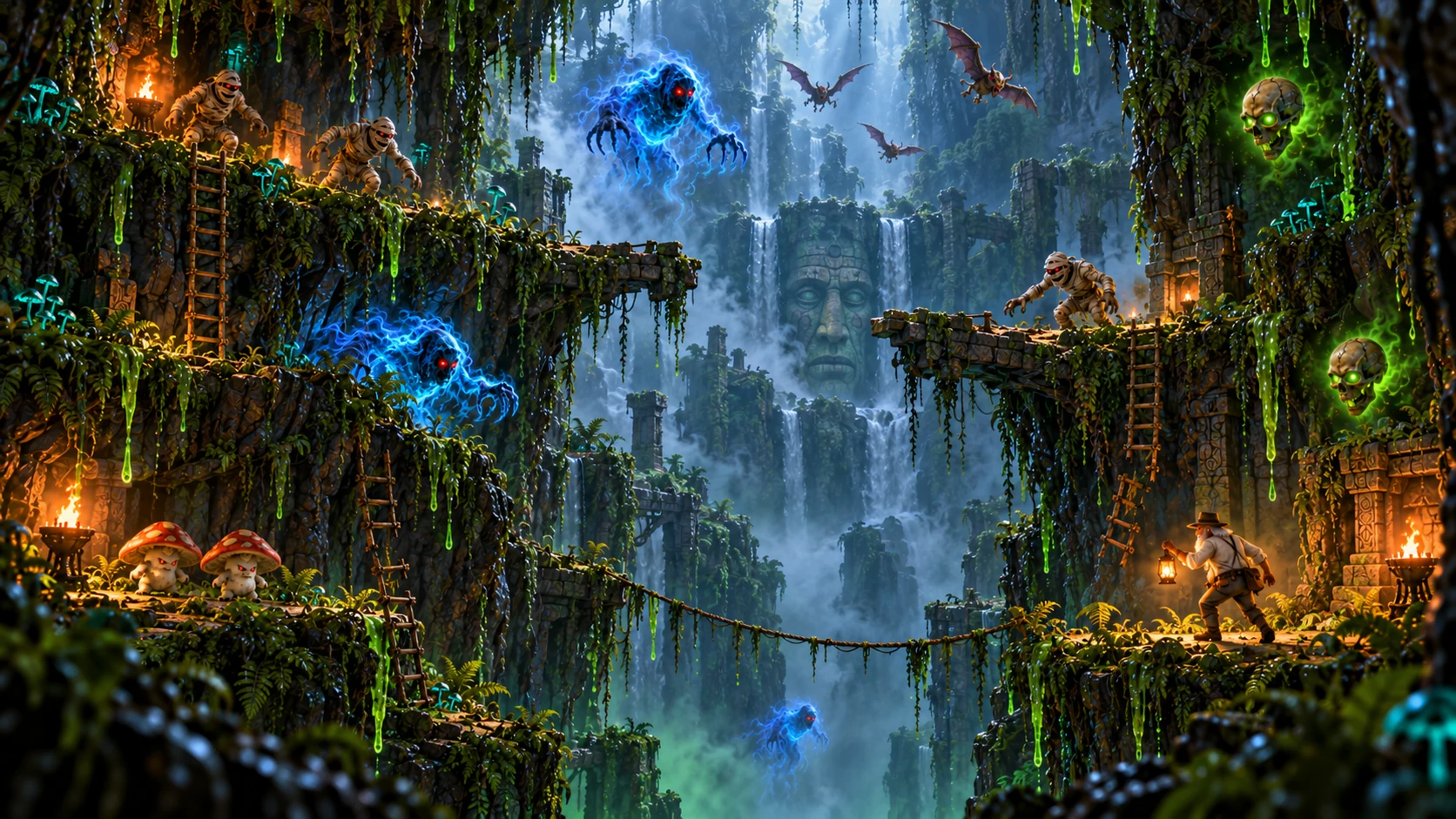
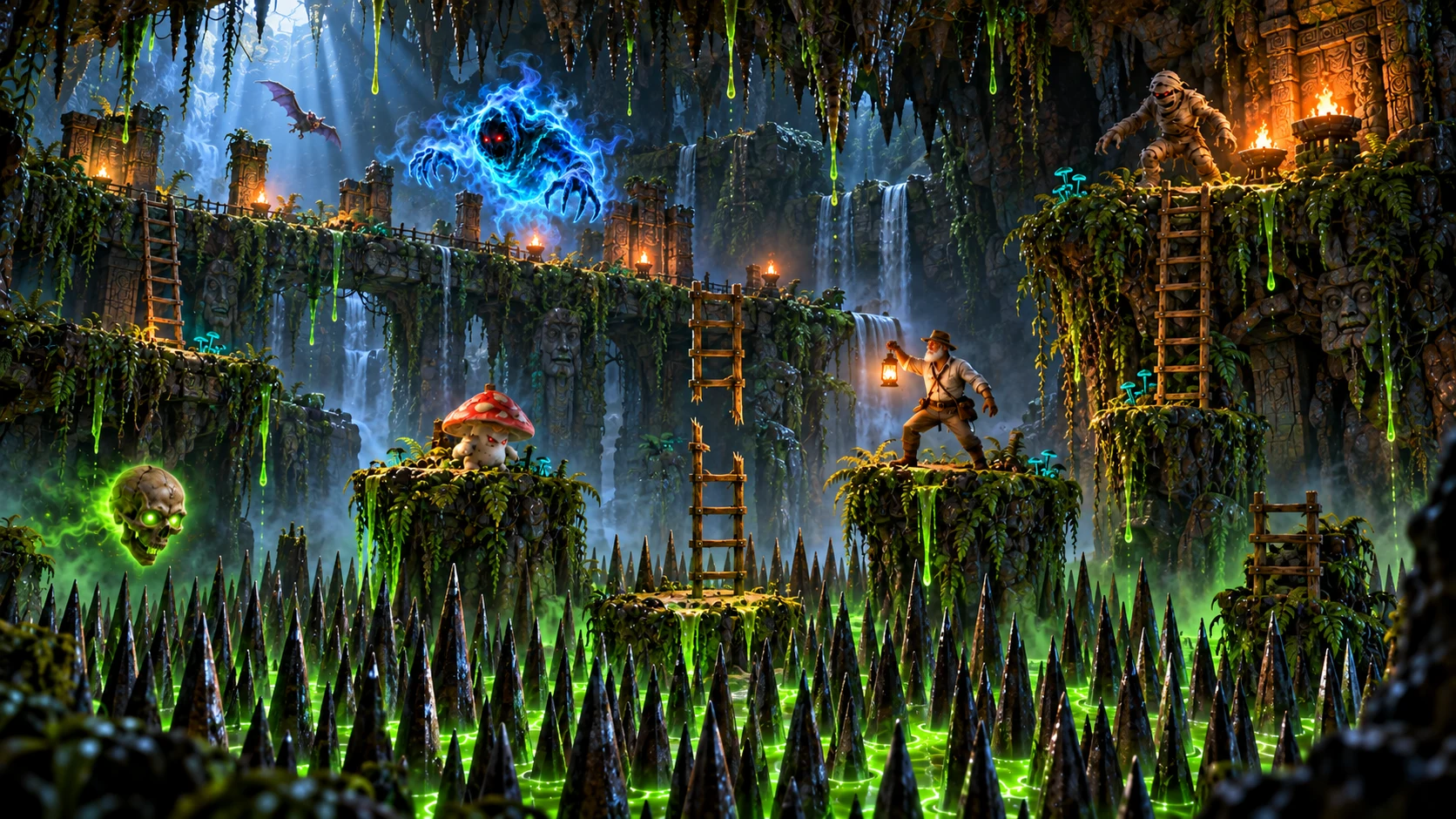
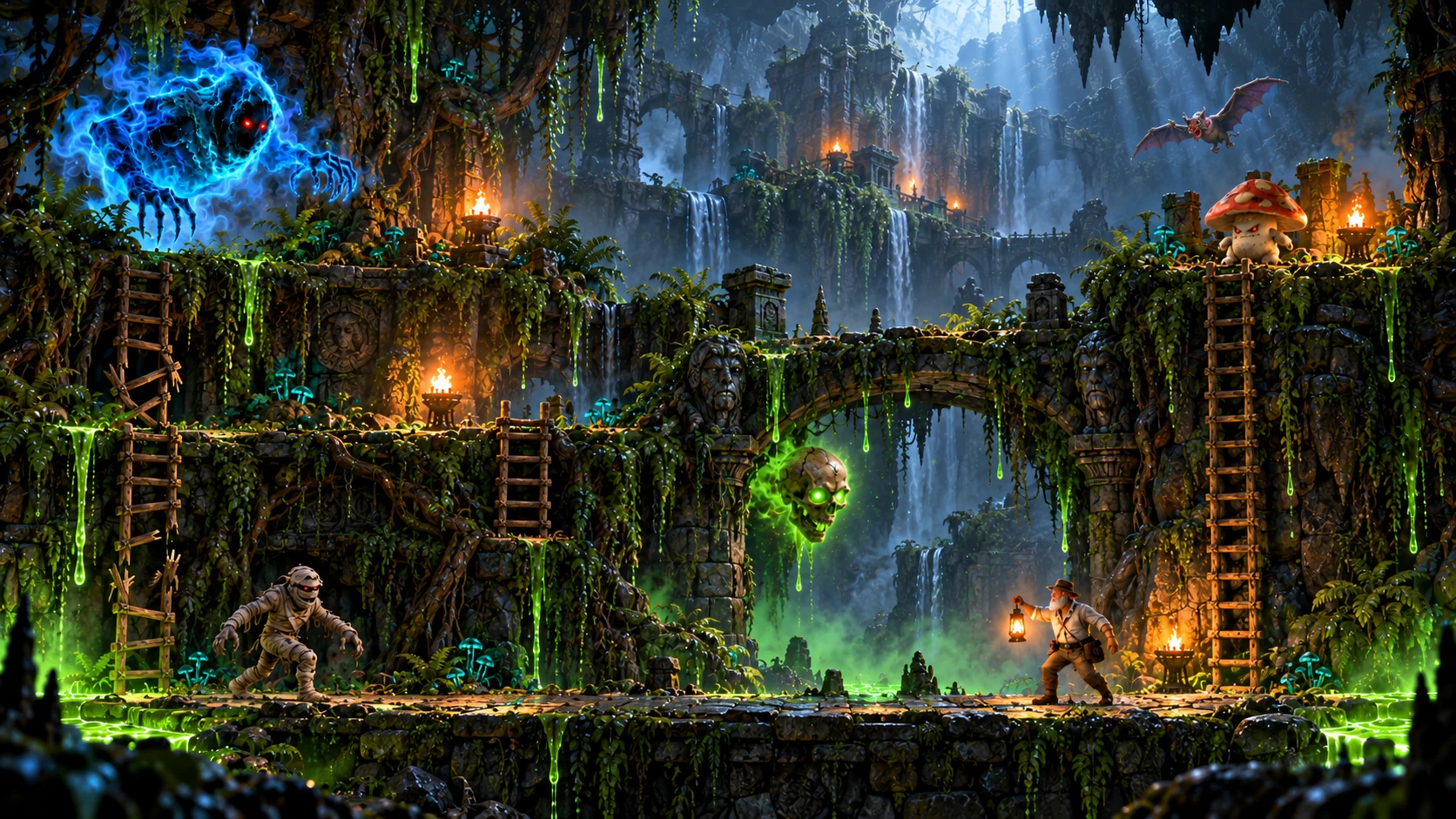
The setting is a ruined underground city whose inhabitants were cursed by a ruler consumed by jealousy. Over time, the city has become a place of broken structures, overgrown passages and dangerous pools. An elderly adventurer with a battered hat, white beard and enduring curiosity ventures into a place from which others have not returned.
The challenge inside each screen
Room layouts are intended to combine route finding with platform movement: reaching ladders, judging jumps, avoiding hazards and navigating around enemies. The present game is a single-screen platformer. Work on scrollingControl is a related ecosystem project, not evidence that this version of The Lost Caverns has become a scrolling game.
The player and the creatures
The main adventurer’s visual identity sits alongside concepts for a blue ghoul, cavern mummy, possessed skull, demon bat and other cavern creatures. Character selection is planned so that players can choose who goes into the caverns. The artwork explores those possibilities; concept illustrations are not screenshots or proof that every character and enemy is implemented.
Why the game led to drivers
As the NextBASIC game grew, performance fell to around 6–7 frames per second. Player control became the first major responsibility moved into assembly, leading to playerControl. BASIC still organises the game and owns its rules; the driver handles its specialist movement work. That division prompted further reusable driver ideas.
Current position
Development is on hold until audioControl Driver is released. The game currently uses separate drivers for AY sound effects and PT3 music. Bringing those together through audioControl is the prerequisite for resuming the game. The project, artwork and development history remain available; the tutorial is temporarily hidden pending substantial revision.