
particleControl Driver
Reusable particle effects for the ZX Spectrum Next, configured from BASIC and designed to work across games. The first version concentrates on effects within the visible screen.
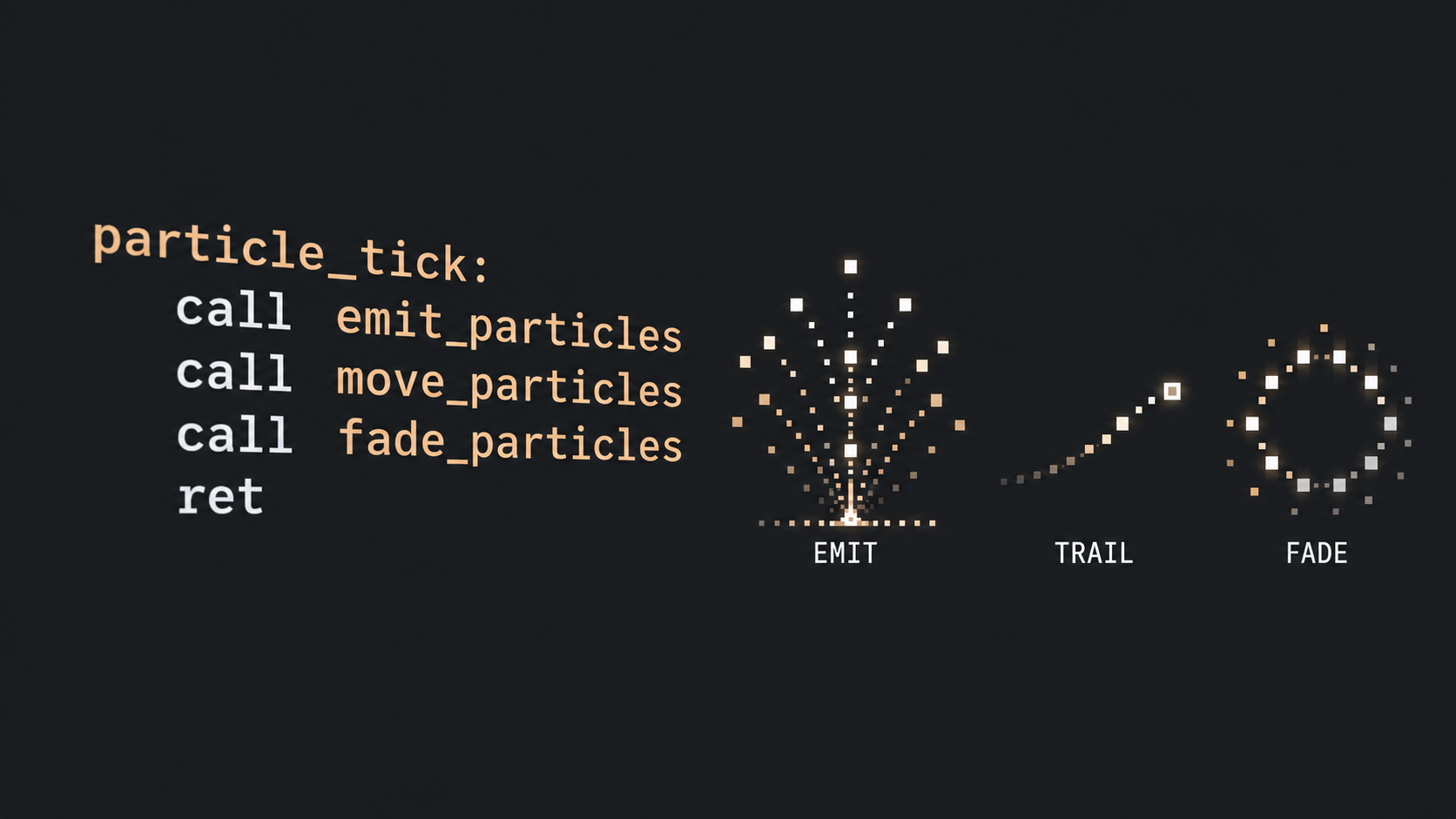
Give effects their own driver
particleControl Driver is intended to add a configurable particle system to the growing family of ZX Spectrum Next drivers. Flames, electrical effects and trails are examples of the kinds of effects a game could create while BASIC continues to organise the wider game.
The driver is being designed for reuse across games. It should not depend on The Lost Caverns or one fixed effect: the developer will choose the appearance and configure how particles are emitted, move and change.
Different effects, one reusable system
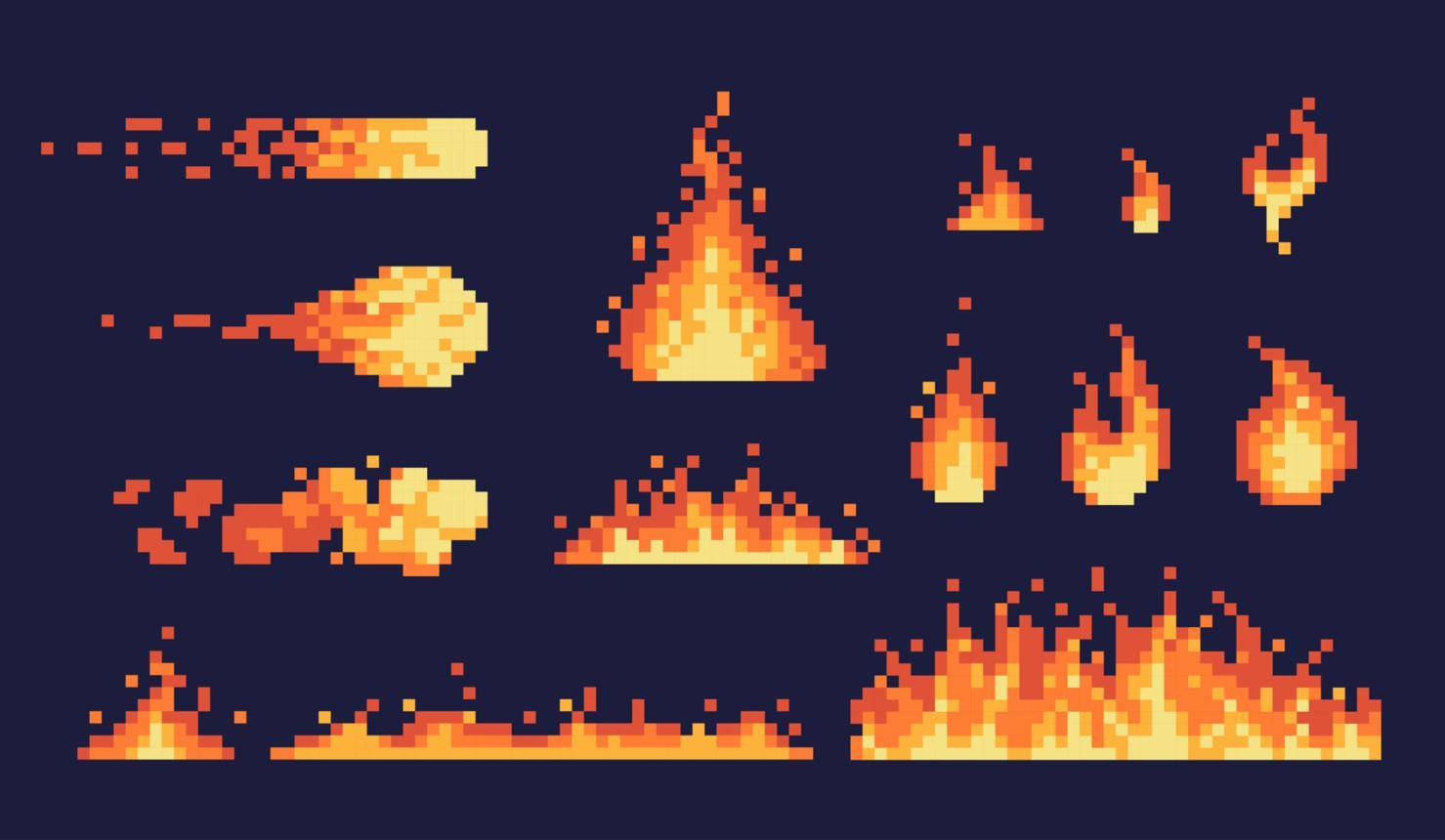
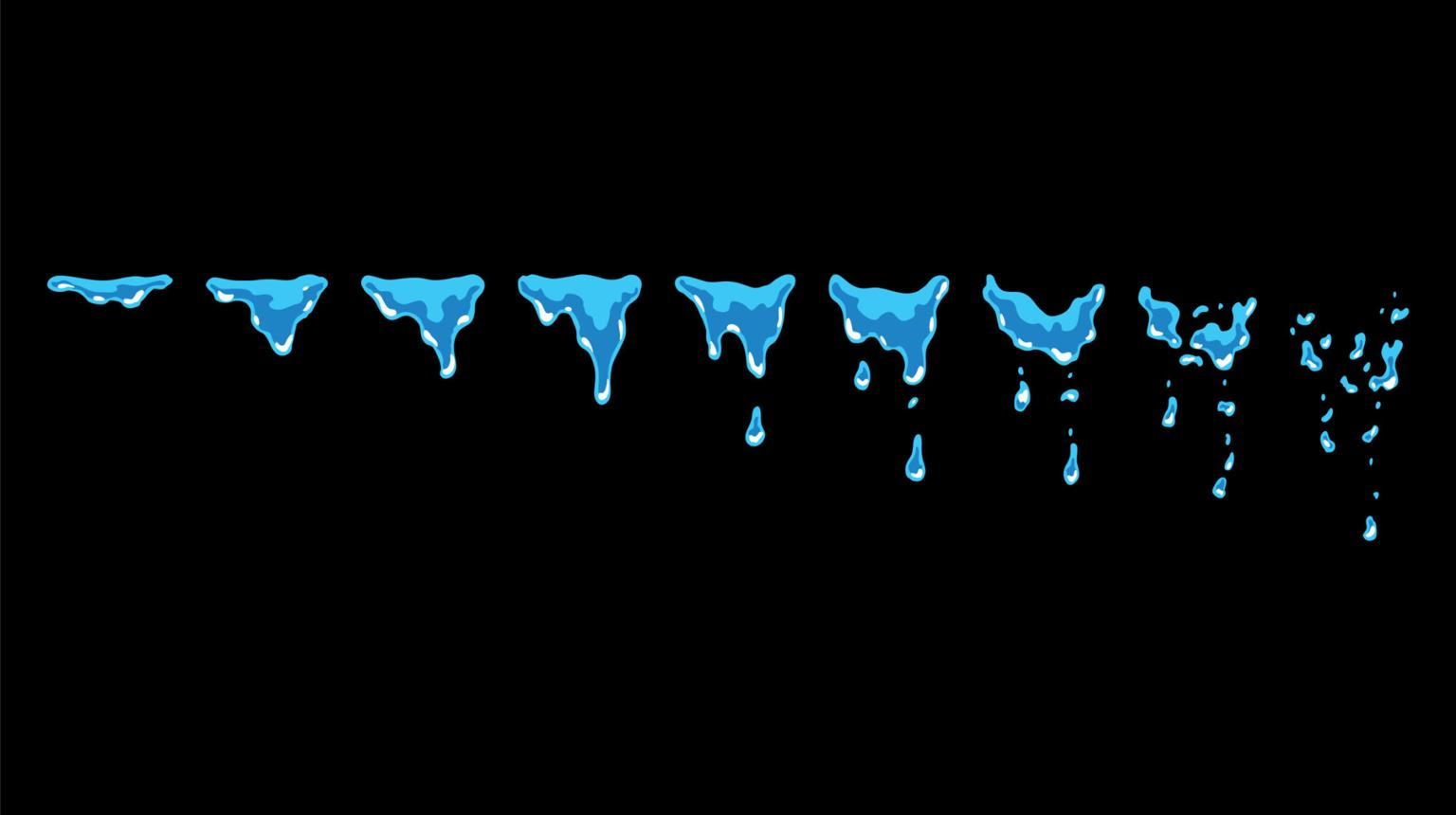
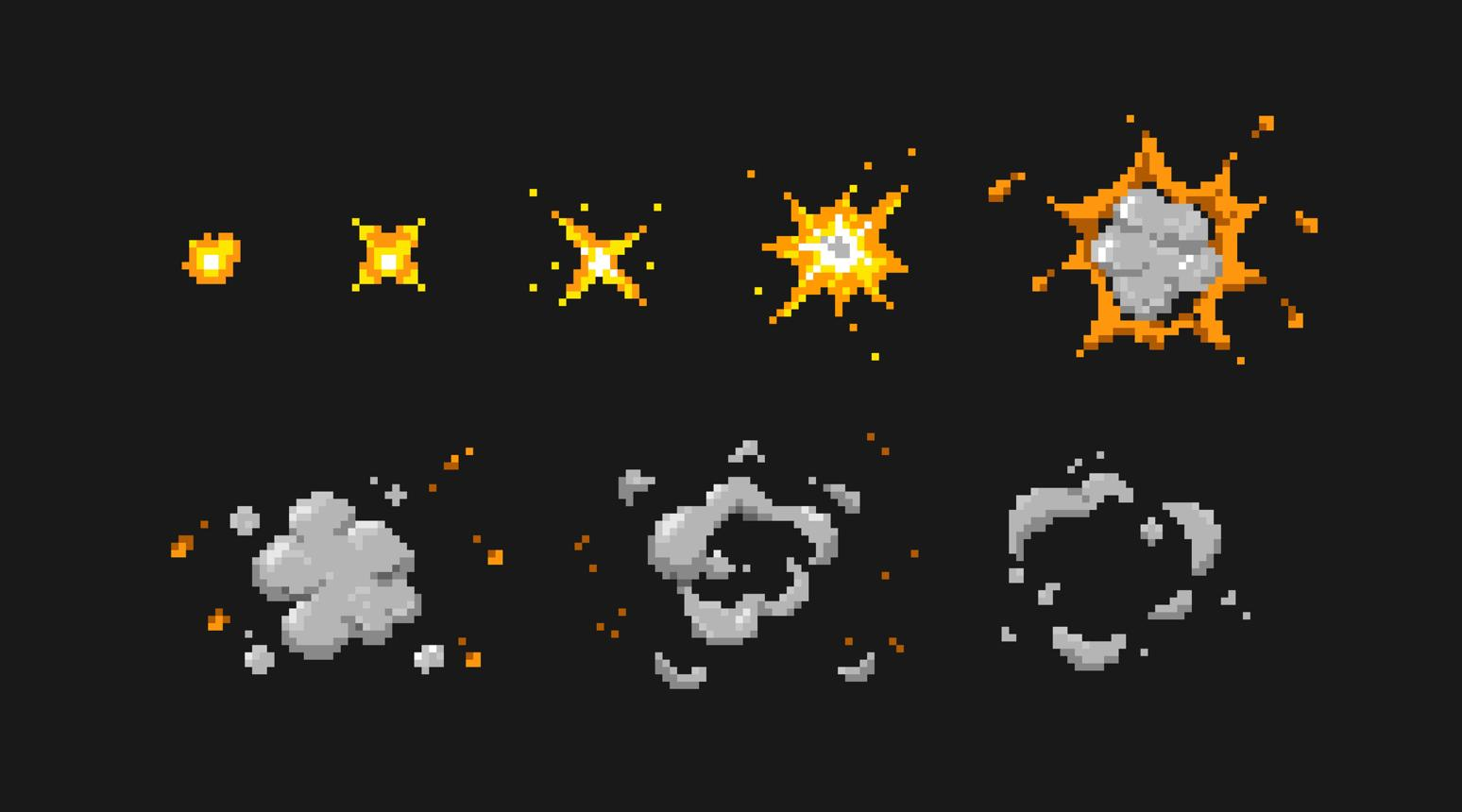
I want one configurable system to support very different kinds of game effects. These reference images illustrate the visual ideas behind that aim. They are examples of existing artwork, rather than screenshots of particleControl in operation.
Fire and embers
A steady flame could keep producing rising embers, while a short burst could suggest an ignition or a fiery impact. Changing the source’s strength would let a torch grow or burn down; the game would choose how that change affects the appearance.
Fire illustration by SickleMoon — view the artwork.
Water and splashes
A splash breaks into separate droplets before disappearing. The same idea could support dripping water, spray or bubbles, with the game choosing the direction, spread and lifetime. Interaction with a scrolling landscape belongs to the later world-based work.
Reference artwork: A sprite sheet, a water trap, a splash. Animation for a game or a cartoon.
Dust and explosions
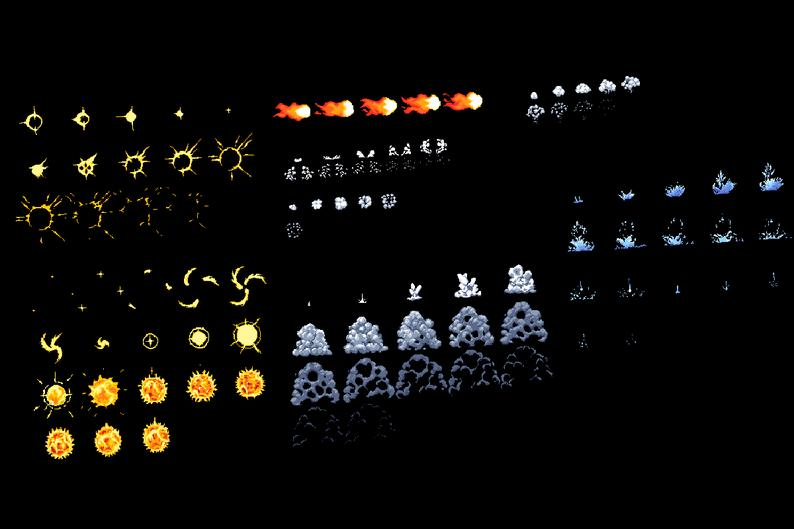
An impact could release a brief cloud of dust or fragments, while an explosion could move from a bright flash to lingering smoke. Burst effects and changes over a particle’s lifetime are intended to make those moments feel more natural.
Reference artwork: Sequential pixel explosions animation.
Magic and energy
Glowing sparks, power-up trails and spell effects show how the same system could suit fantasy games as well as physical effects. Choosing different artwork and behaviour should make it possible to give each game its own visual identity.
Magic Pack 5 by ansimuz.
V1 is intended to offer customisable starting points for fire, smoke, explosions, sparks, rain, dust, bubbles and magic. Appearance and behaviour will remain separate choices: a flame-shaped image does not, by itself, decide how the particles move.
An emitter that can change with the game
An emitter is the source of an effect. Its position and strength can change as the game runs, so a torch can grow brighter, an electrical effect can become more intense, or a trail can follow a moving object. Configurable speed and spread will help the same system create different results.
Start with the screen, then grow into the world
V1 uses positions within the visible screen. World-based effects are planned for V2, when scrollingControl is available to develop the scrolling behaviour alongside it. The particle driver will remain a game component, configured by BASIC and kept with the game that uses it.
Visual effects with room for other senses
An emitter’s position and changing strength could also help future games coordinate an effect with audioControl or speechControl. A flame might have a matching crackle, or dangerous electrical activity could prompt an alert. These are later integration opportunities; particleControl V1 does not change either of those drivers.