
speechControl Driver
Last updated: · On hold
M3B — connect the first audible request
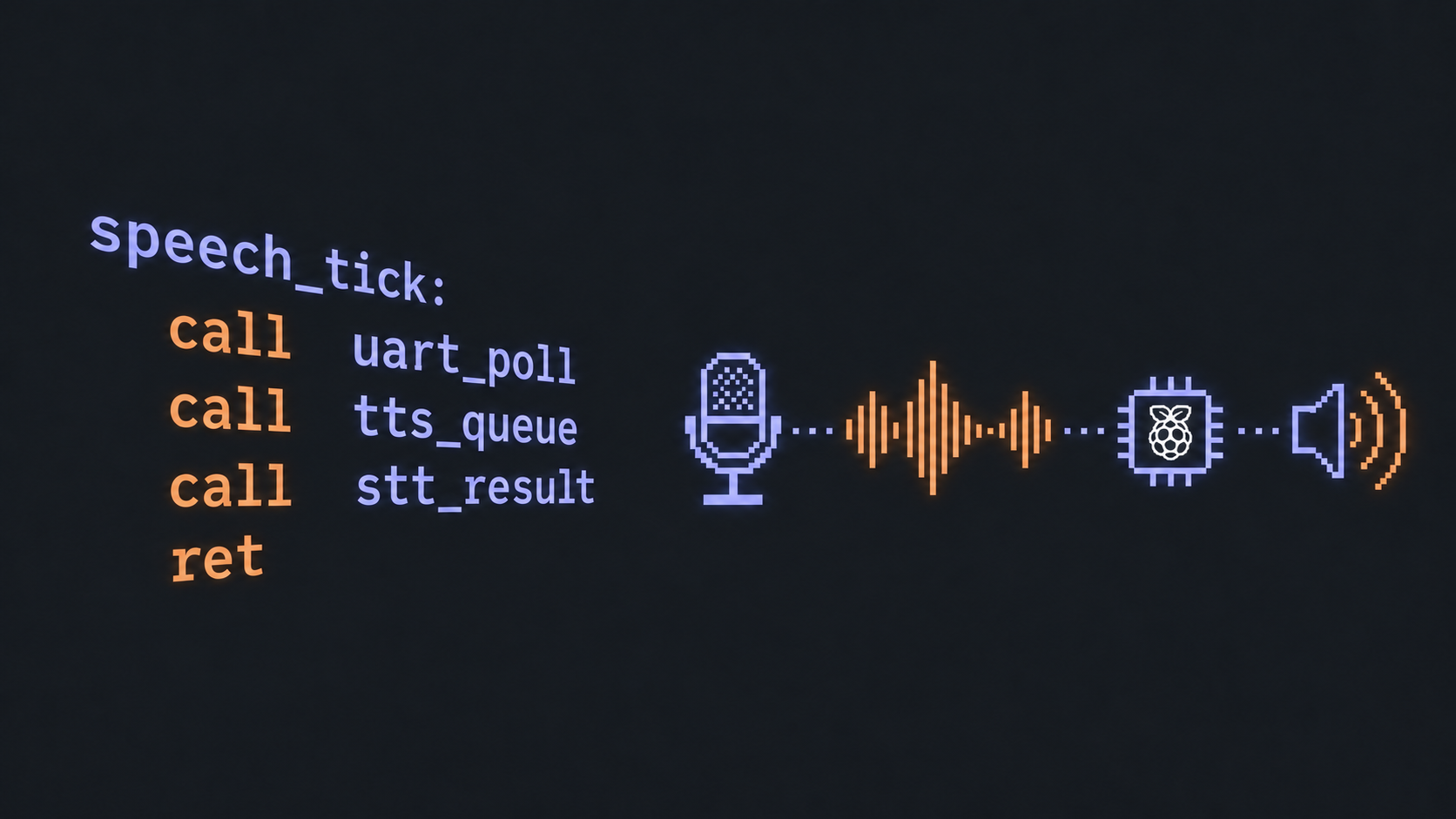
Keep the proven TTS transport and acknowledgement behaviour, generate speech with eSpeak NG, then play the resulting WAV through the explicitly selected Next DAC. Start with fixed defaults and one utterance at a time so that the complete path can be verified without adding unrelated features.
Prove the joined-up path on hardware
Confirm that one request from the Next produces the intended spoken sentence through the integrated service while retaining the normal acknowledgement and clean recovery. The separate synthesis and playback tests provide the baseline for this next check.
Build out the intended V1 speech controls
After the first integrated audible request works, develop configurable voice, rate, pitch and volume, the eight-slot queue, full utterance length, status and stop/clear behaviour. These remain planned development, rather than features already delivered by the first speech test.
Harden setup and develop recognition
Verify service installation and version reporting, establish UART settings explicitly, then develop microphone support and constrained speech recognition. Prove one-shot recognition before continuous listening, grammar upload and the result queue.